.avif)


.png)
.png)


Nuances in Smart Home Technology And What to Understand Before Installing
Family not holding their own around the house? Let smart home technology help with the hassle of regular routine and enhance your daily productivity.
May 14, 2026
|
.webp)
Nuances in Smart Home Technology And What to Understand Before Installing
Smart home technology can enhance your home's functionality, but make sure to choose wisely.
TABLE OF CONTENTS
- Current Smart Home Trends
- Smart Home Necessities
- Smart Kitchens & Laundry
- Smart Security
- Smart Entertainment
- Home-Wide Applications
- Home-Wide Smart Tech Installation Considerations
- Smart Home Technology As Part Of A Full-Service Design-Build Renovation In NYC
- Frequently Asked Questions About Smart Home Technology In NYC Renovations
Comfort and considered design have always driven a home renovation. Smart home technology now adds efficiency to that list, giving a household new ways to manage daily routines with less effort. The range of options is wide, so the useful exercise is matching the technology to how you actually live and folding the groundwork into the renovation from the start.
What follows covers the main categories of smart home technology and where each one fits, along with the installation factors that matter most when renovating across different home sizes.

[#Current]Current Smart Home Trends[#Current]
Integration Across The Home
The central benefit of smart technology is interconnection. Entertainment systems play the same track through every room at once. Lighting dims on a shared schedule. A security system pairs with a virtual assistant to lock the home at a set hour each night. A home that operates in concert puts the whole household at ease.
AI That Learns Your Patterns
Many of us assume we know the ideal refrigerator temperature or the right thermostat balance for comfort and a reasonable heating bill. Smart systems with AI now study those patterns and adjust continuously for accuracy that manual settings rarely reach. The result is a home that manages its own fine-tuning while you attend to everything else.
Touch-Free Operation
Hands-free operation has moved from novelty to expectation. Voice-activated ovens and thermostats, along with sensor-driven fixtures, let a household run much of the home without contact. The appeal is equal parts hygiene and ease.
Safety And Security
One of the most practical roles for smart technology is security. Sensor-based alarms can alert authorities on their own, and cameras stream to your devices for around-the-clock visibility. A household gains real reassurance from knowing the home is watched.
Supportive Smart Health
Households caring for a loved one face steady demands, and smart technology offers a measure of support. Humidity sensors in thermostats, temperature-screening doorbells, and connected medical alert systems give caregivers added stability through difficult stretches.

[#Smart]Smart Home Necessities[#Smart]
Smart Thermostats
A smart thermostat is often the first step into connected living. Remote adjustment by app makes regulating heating and cooling straightforward, and higher-end models hold a geofence around the home so the temperature shifts toward your preference as you approach. In a NYC apartment, the building's heating system sets the range of compatible options, which is worth confirming early.
Smart Electrical Outlets
Smart outlets bring anything plugged into the wall under app control. Some models manage each socket independently, and several accept voice commands for hands-free switching.
Smart Lighting
Smart lighting ends the trip across the room to reach a switch. Beyond simple on and off from your phone, these systems hold preset levels and colors to set the right tone for any moment. Dimming and scheduling run from a single app, as do custom scenes for different times of day.
[#Kitchens]Smart Kitchens & Laundry[#Kitchens]
Smart Ovens
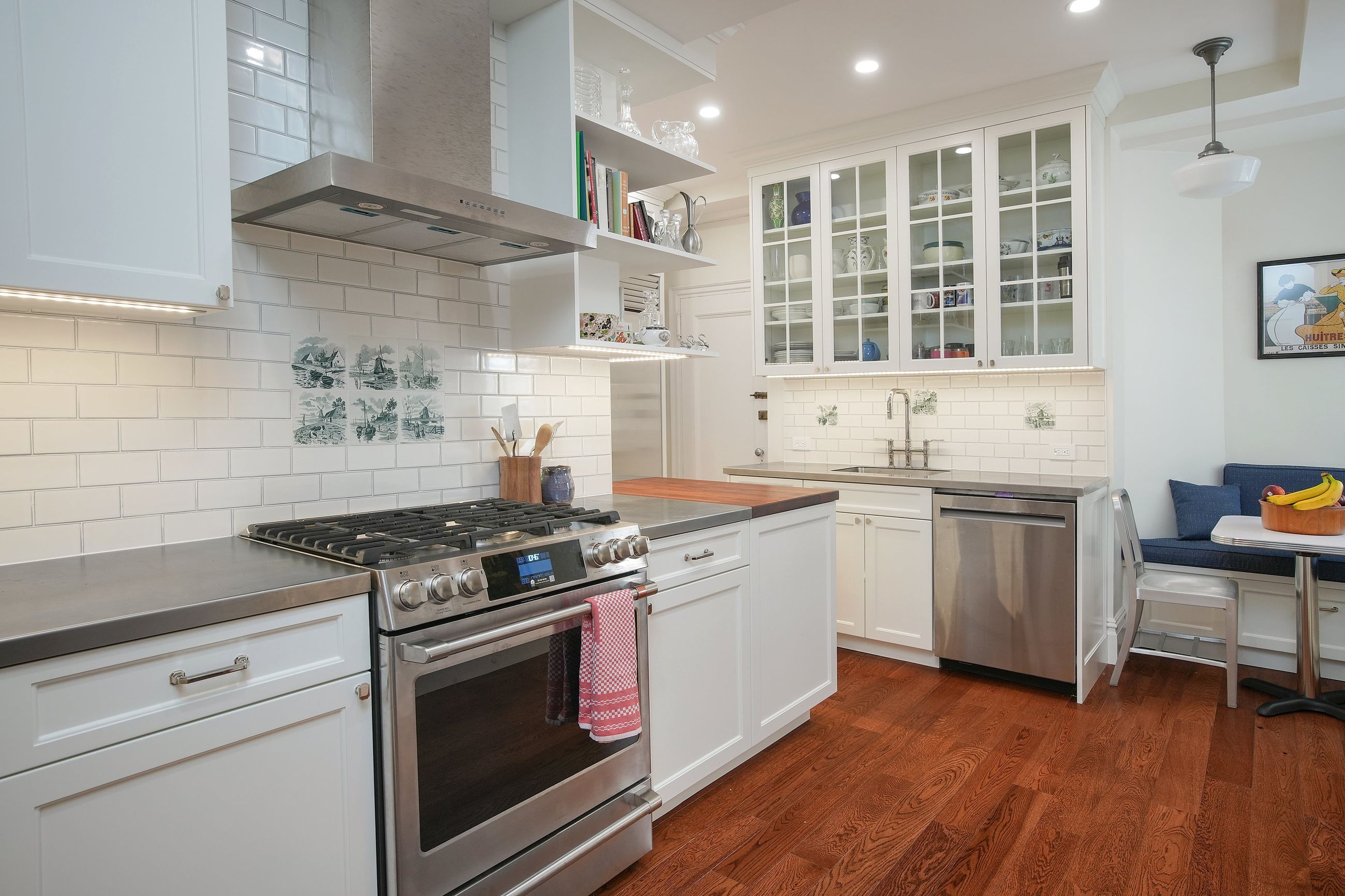
A smart oven removes much of the guesswork from a large meal. Temperature and timer set from anywhere, with alerts when the dish is ready. Many models also run diagnostics and self-clean.
Smart Refrigerators
A smart refrigerator adds a layer of utility to the kitchen. Features range from open-door alerts and expiration tracking to voice updates and built-in touchscreens, all aimed at keeping the kitchen running efficiently.
Wi-Fi Dishwashers
A connected dishwasher runs on a schedule set from a phone or tablet, with a notification once the cycle finishes. Scheduling around the household's rhythm keeps the kitchen orderly.
Smart Washer And Dryer
Smart laundry starts, pauses, and changes cycles from a connected device, much like a smart dishwasher. Built-in diagnostics flag issues directly, which spares the search for model numbers and how-to videos.
Smart Coffee System
A connected coffee maker keeps a household on schedule, brewing to a preset time or on demand by app. Many units grind and portion the beans on their own for a consistent cup each morning.
-min-p-1080.jpg)
[#Smart-Security]Smart Security[#Smart-Security]
Video Doorbells And Alarm Systems
Smart security covers cameras, video doorbells, and alarm systems, most linked to mobile devices for continuous monitoring. Many activate on a schedule, pair with a virtual assistant for voice control, and keep working through a power loss. Professional support usually comes with the service.
Automated Locks
Smart locks suit a household that prefers to manage access directly. Connected to your phone, they hold a locking schedule so no door stays open by accident, and they allow remote entry for a dog walker or houseguest from anywhere. In an apartment, entry hardware also answers to egress codes and building access rules.
Medical Alert Systems
For a household providing routine or temporary care, every preventative measure carries weight. Connected medical alert systems install readily and place safety buttons at key points throughout the home, each able to summon medical support at once.
[#Entertainment]Smart Entertainment[#Entertainment]
Wireless Speakers And Sound
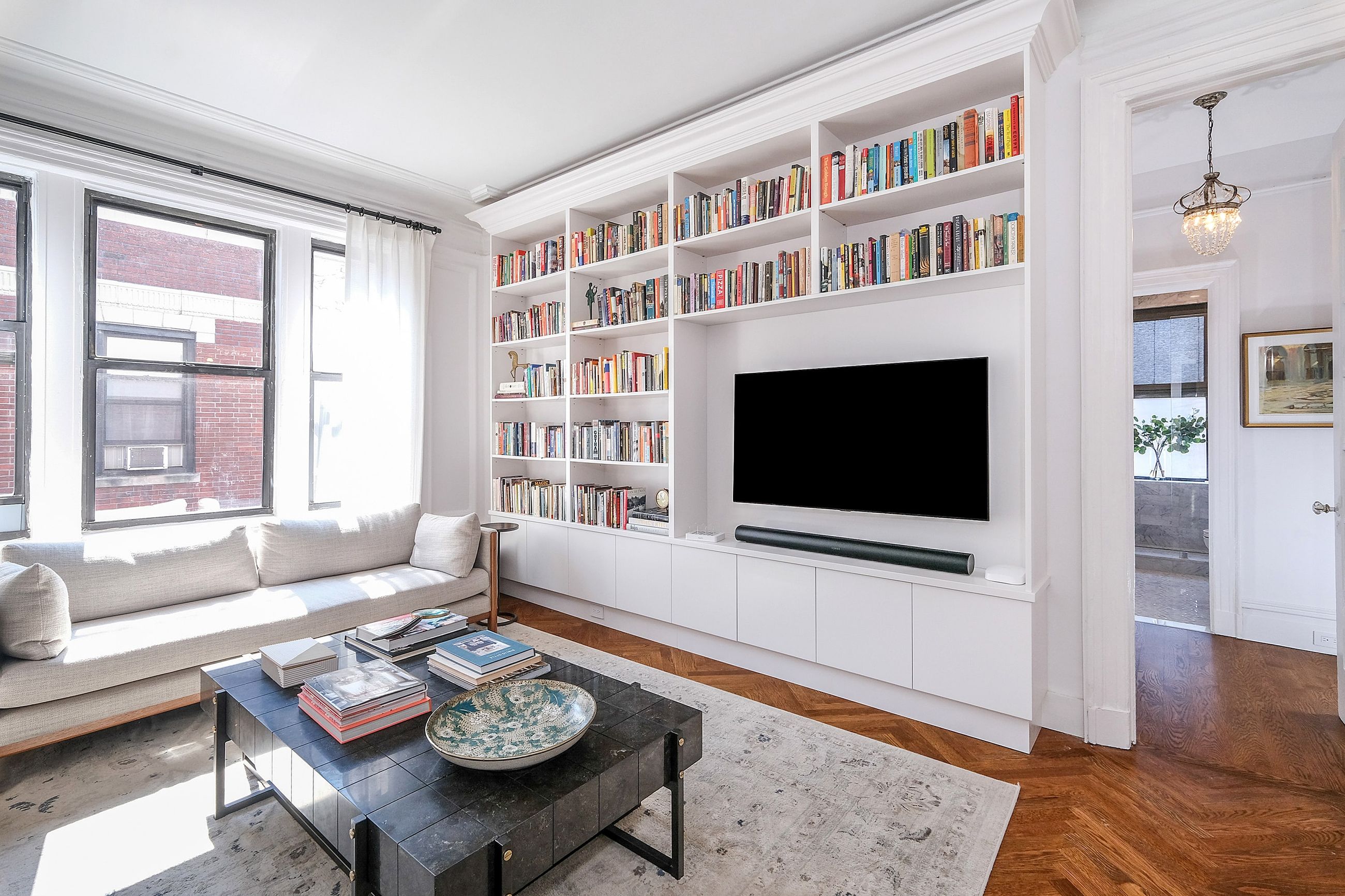
Wireless surround systems are a centerpiece of many smart home setups. These speakers carry synced sound through every room and run from a phone, and their wireless design keeps the look clean. Placement and pre-wiring are worth planning during the renovation for the best result.
Smart Televisions
A smart television consolidates browsing, photo sharing, app-based viewing, and music streaming into one hub. The larger models double as a centerpiece for the room while handling the full range of entertainment in a single ecosystem.
[#Home-Wide]Home-Wide Applications[#Home-Wide]
Smart Windows And Shades
Motorized shades and smart windows hold temperature steady while adding a refined, hands-free finish. Shades adjust from your phone, and several window technologies bring their own glare and heat control. These suit NYC high-rises well, where strong sunlight can otherwise overwhelm a room. Our guide, Renovations And Technology: 10 Smart Home Remodeling Ideas, covers several window options in more depth.
Smart Ceiling Fans
A smart thermostat manages temperature, and a smart ceiling fan complements it by cooling a room quickly from anywhere. The two together give a household fine control over comfort.
LED-Lit Bathroom Mirrors
Smart, LED-lit bathroom mirrors bring shadowless, adjustable light to a vanity, controlled by voice and dimmable to the moment. Higher-end versions add integrated sound or a built-in display.
[#Installation]Installation Considerations[#Installation]
Some of these technologies install with a simple plug and setup. Others call for planning and in-wall work. A few points deserve attention before making a home more efficient with smart technology.
How Much Smart Technology Is Actually Needed?
Not every home needs a full suite of connected features. A practical starting point is the set of systems you will use daily, with room to expand as the experience proves its worth. A design-build firm can refine those options and install a custom suite matched to how the household lives.
Wireless Support Requires Bandwidth
Wireless features throughout a home rest on considerable wiring behind the scenes. A strong, high-bandwidth network carries simultaneous 4K streams, continuous camera feeds, and uninterrupted audio, which usually means running cable through the walls of most rooms. For a renovation that includes smart audio and video, a forward-thinking design-build firm maps the wiring to the home's layout and sets outlet placement for the cleanest result.
Security Setup Takes Planning
Smart security invites several decisions worth settling together. Whether cameras stay visible for deterrence or hidden for aesthetics, whether basic monitoring suffices or two-way audio is needed, and whether flood detection belongs in the plan all shape the wiring and configuration a professional will handle.
[#Consider]Consider Smart Home Technology As Part Of A Full-Service Design-Build Renovation In NYC[#Consider]
Considering a residential renovation in NYC? Gallery KBNY actively guides smart home configuration and installation for clients in Manhattan and Brooklyn via our full-service design-build approach to renovations of condos/co-op, lofts, pre-war apartments, townhomes and brownstones. To inspire your dream renovation, view our portfolio of renovation before and afters, learn more about Gallery, or simply contact us today to start the process.
-min.avif)
[#faq]Frequently Asked Questions About Smart Home Technology In NYC Renovations[#faq]
Which smart systems have to be decided before walls close in a renovation?
Anything that lives inside the wall belongs in the design phase: structured cabling, lighting control with neutral wires, motorized shade power, in-ceiling speakers, and hardwired cameras. These rely on rough-in work that is disruptive and costly to add once finishes are complete. Plug-in devices and smart locks can join the home at any later point.
How does a co-op or condo board factor into a smart home installation?
In-wall cabling and low-voltage runs are part of the filed alteration scope and move through board and engineer review with the rest of the renovation. Exterior-facing cameras or video doorbells usually need separate sign-off because they touch shared areas. Settling these points during design keeps the approval process clean.
Does the building's HVAC limit which smart thermostat will work?
Yes. A steam system, a PTAC unit, and central air each pair with different thermostat hardware, and some pre-war systems support only a narrow set of options. Confirming the base building system before selecting a thermostat avoids buying equipment that cannot be commissioned.
What does a reliable whole-home network require in a Manhattan apartment?
Even coverage usually calls for ceiling-mounted access points wired back to a central closet, since plaster and pre-war wall assemblies absorb wireless signal. The closet itself needs space and ventilation for the rack, which is best located during the layout phase rather than improvised afterward.
Is it worth wiring for smart systems you may not install right away?
Often, yes. Running conduit and low-voltage cable while the walls are open leaves capacity for future additions at a fraction of the later cost. A measured approach wires for likely expansion and finishes only what the household needs at move-in.
Can smart home work be coordinated within a full renovation rather than handled separately?
A design-build firm folds the audio-visual, network, lighting, and security design into the construction documents, so wiring, outlet placement, and equipment locations resolve alongside the architecture. That coordination keeps the finished home free of surface-mounted compromises.
let’s
Design-Build
together


%20Gallery%20KBNY.avif)