

.png)
.png)


Our
Design-BUILD PROCESS
As NYC’s premier design-build firm, our full-service process is the key ingredient in our recipe for a successful NYC renovation. We’ve developed a comprehensive and proven method designed to make New York City home renovations seamless and comfortable as possible. From architecture services and interior design to board approvals and build, we handle the project every step of the way.

DESIGN-BUILD CONTRACTORS TRUSTED ACROSS NEW YORK CITY


Gallery KBNY has earned Houzz Best of Design honors seven years running, and we hold every project to that same standard. Our clients consistently leave 5-star reviews. From Brooklyn to Manhattan, we apply our expertise to everything from co-ops and condos to historic brownstones and lofts.
Before You Buy: The Pre-Purchase Renovation Assessment
Some readers arrive at this page while still deciding whether to buy, well ahead of a signed contract. For a Manhattan or Northern Brooklyn co-op, condo, townhome, or loft that needs real renovation work, Gallery KBNY offers a Pre-Purchase Renovation Assessment: a principal-led walkthrough of the space and its alteration agreement, timed for the contract diligence period.
Infrastructure and concealed conditions get checked on site, including electrical capacity, asbestos, and plumbing, then translated into a realistic cost range and timeline. A written assessment follows within 24 hours, along with a working consultation to walk through what it means for the purchase decision. There is no charge for this step, and it exists so the six phases below start from an accurate picture rather than a guess.
Planning & Scope of Work Assessment
Phase 1 - Introductory Phone Call
Every renovation begins with an introductory phone call, a high-level conversation covering:
- The Desired Scope of the Project
- Our Client’s Key Needs and Objectives
- Building Rules and Requirements Contained in the Alteration agreement
- Feasibility of the Renovation with Respect to Property Type, Building Rules, and Rough Timelines and Costs
%20Gallery%20KBNY.avif)
Phase 2 - Site Meeting
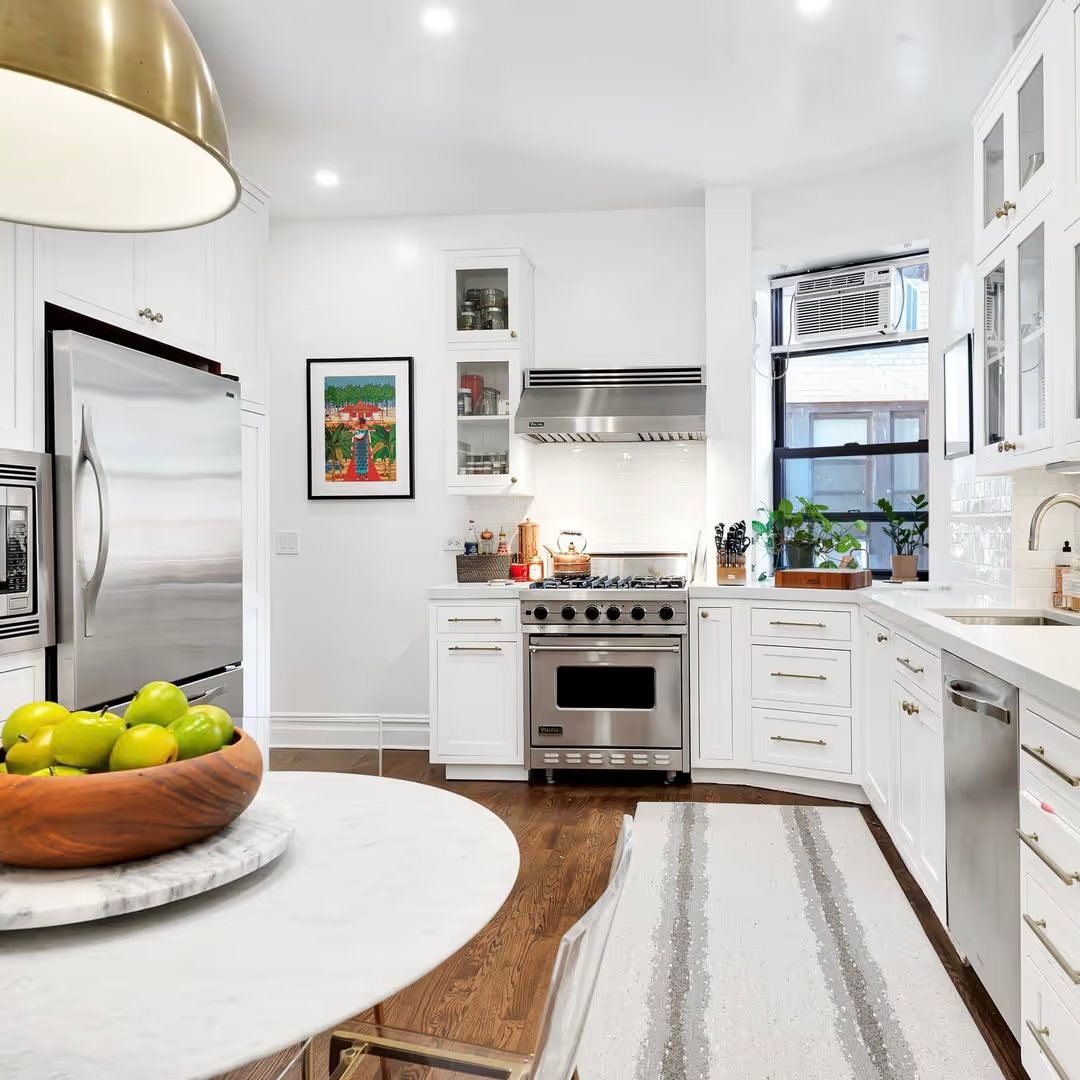
A Gallery KBNY team member walks the property in person to assess site conditions, checking electrical capacity, asbestos risk, load-bearing walls, and any other factor that could shape the plan. Any unforeseen condition, an outdated electrical system or a hidden column, gets addressed here, well before it can affect the design. You leave this meeting with a revised range of costs and a timeline based on what the space actually allows.
Phase 3 - Concept Design and Project Budget
Beyond the site assessment, this phase considers any additional task needed to mitigate surprises later on.
A more detailed discussion of scope and design concept follows the walk-through, covering space planning and design aesthetic, alongside a risk management assessment confirming that every design, material, and job site compliance is met before construction begins.
Once the big-picture design concept is established, we present you with:
- Proposed 2D Floor Plans
- Detailed Project Budget Containing All timelines, Costs, and Allowances Needed to Complete the Project in Entirety.
.avif)


Pre-Construction & Formal Design Phase
There is no secret formula or magic bullet behind our success. The reason we deliver beautiful projects on time and budget is because we’re diligent in every aspect of our process.
Too many renovations go awry because of some unexpected condition discovered during the demolition phase. In reality, this is almost always a story about poor planning, or complete lack thereof. In every one of our NYC renovations, we aim for the most thorough pre-construction planning possible to anticipate and avoid any potential costly obstacles.
-min.avif)
Phase 1 - Inspections, Diagnostic Testing, and Risk Management.
The pre-construction phase is where these conditions get formally tested, including anything flagged during the initial walk-through. These tests often require probing walls and cutting into existing floors, so they take place only once you are the formal owner of the property and have retained us. Three tests typically make up this phase:
- Electrical Load Test: Determines whether the existing electrical amperage is sufficient for the proposed load or whether an upgrade of existing amperage (or reduction of electrical demand) is required
- Asbestos Test: Determines whether proposed areas of demolition contain asbestos that either needs to be remediated or planned around
- Wall Probes: Determines whether unforeseen obstructions exist inside walls that are proposed to be moved or removed

Phase 2 - Formal Design and Material Procurement
Material selection is the most hands-on part of any renovation: paint color, accent walls, flooring, mouldings, fixtures, countertops, and more. As a full-service design-build firm in NYC, we take on the design, sourcing, and procurement of every permanent fixture in your home.
That same expertise covers every architectural or interior design adjustment that comes up mid-renovation, whether that means shifting a kitchen traffic pattern, adding an archway to a bathroom, or turning an unused closet into a washer and dryer room. We handle all architectural planning and filings on your behalf through our award-winning in-house design team and architects.
Once every site condition is identified, this phase finalizes the floor plan and presents material selection options. It typically includes:
- Design meetings at our design studio and outside showrooms
- Review of 2D and 3D lifelike renderings, plus review and approval of all material options and design plans
- Procurement of all selected finishes and fixtures
- Receiving and inspection of all ordered finishes and fixtures
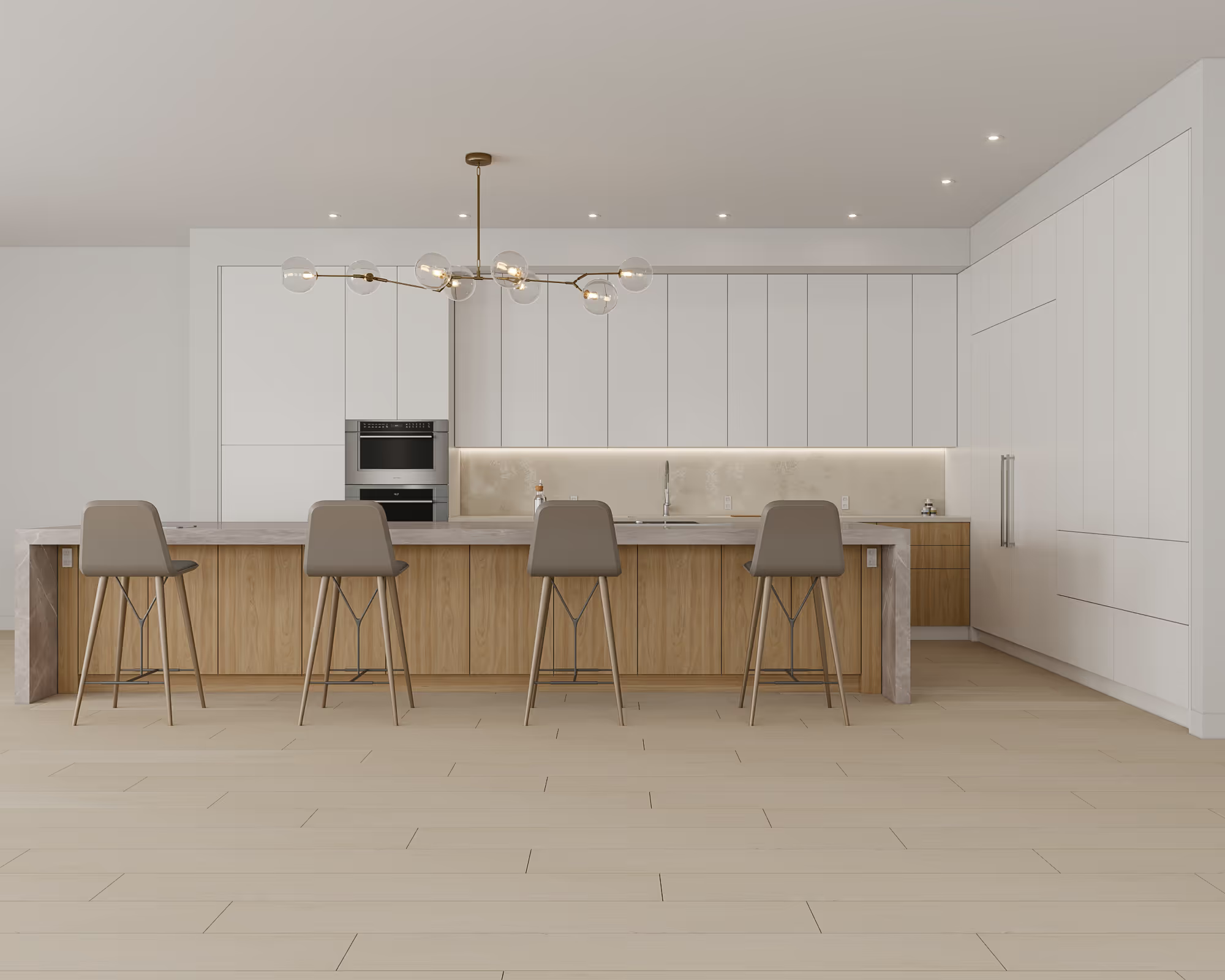
Phase 3 - Lifelike Renderings
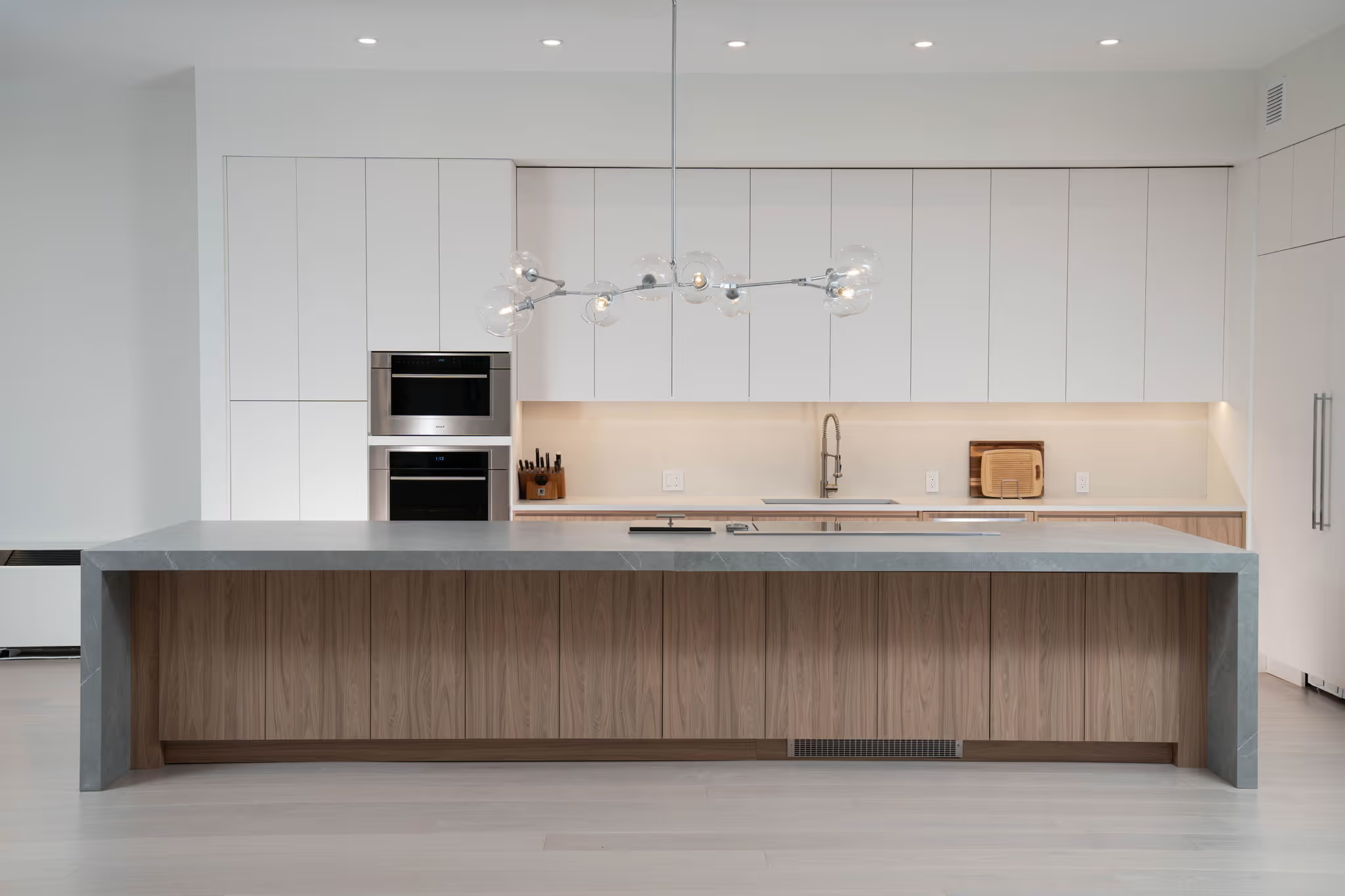
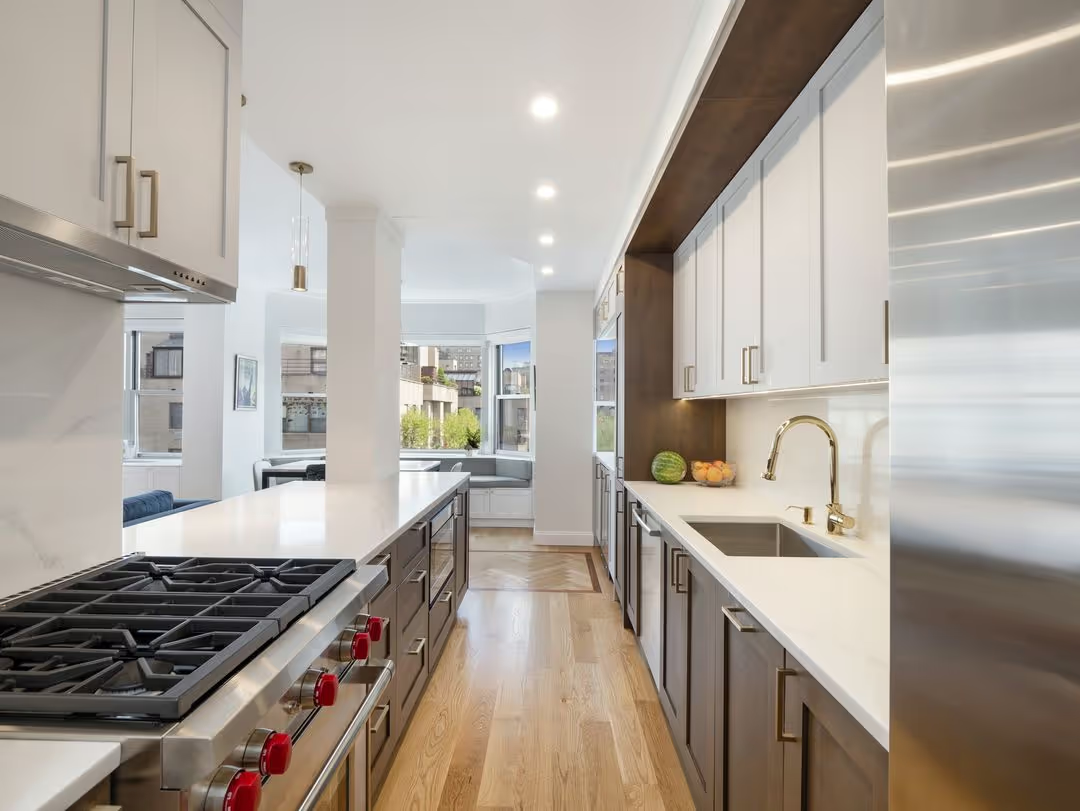
Once every material is chosen, our designers create 2D and 3D renderings for you to review and approve, and the finished project is built to match what you saw on screen. The kitchen render above is from our Manhattan condo renovation at The Chelsea Mercantile on 252 Seventh Ave. The following image is the completed kitchen.
Phase 4 - Building Submission
This phase runs alongside the design phase. We begin the building alteration submission early in planning, and complete it, to the building management company and the NYC Department Of Buildings, once architectural plans are finalized.
We coordinate directly with the building management company and any building-hired reviewing architect to satisfy every requirement for formal approval. Private homes skip this step entirely.
Once building management approves the plans, we submit them to the NYC Department Of Buildings for approval and permitting.
Phase 5 - DOB Submission, Approval, And Permits
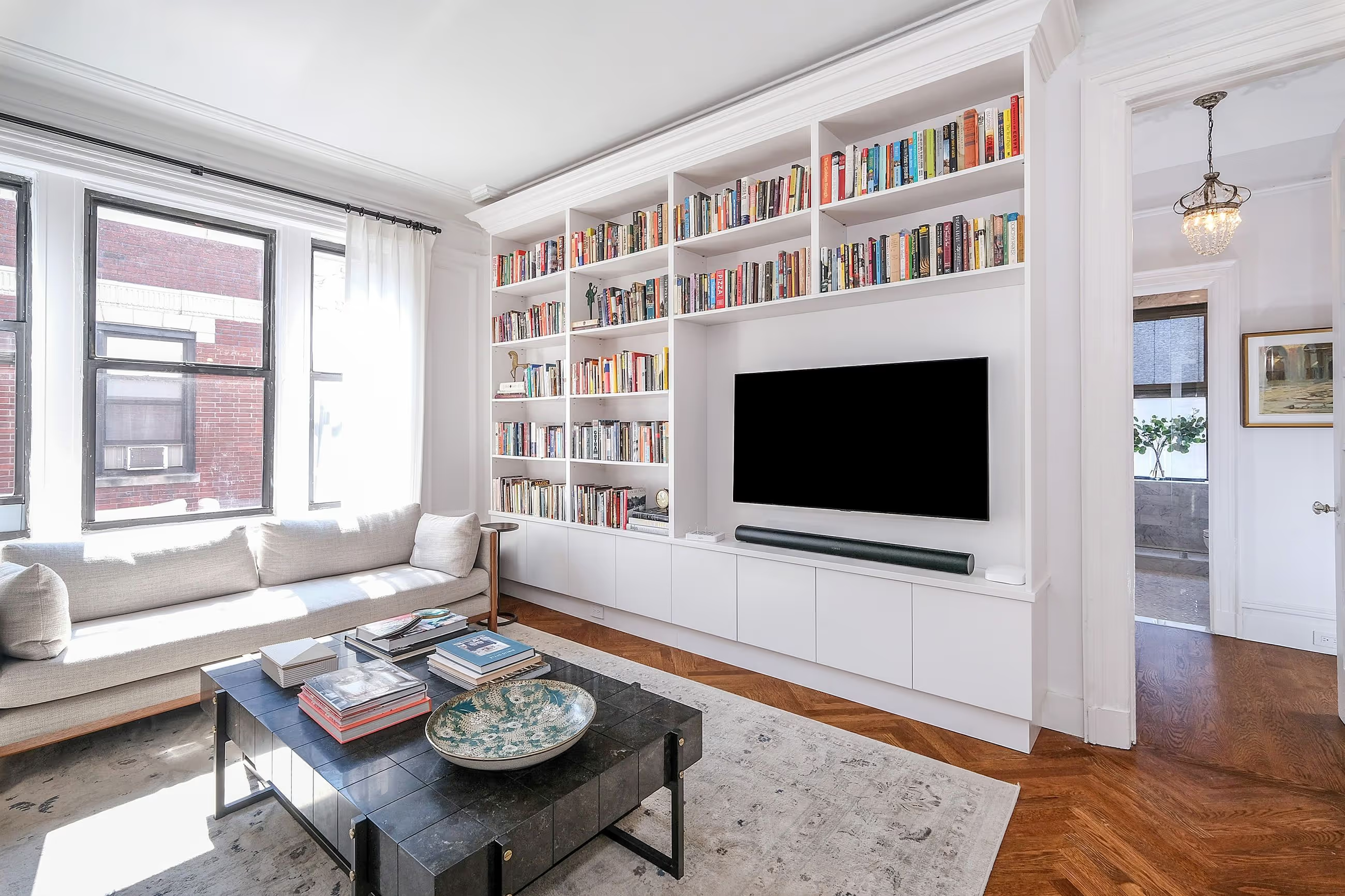
Co-op boards, management companies, and city agencies each move at their own pace. Gallery KBNY takes on the production and filing of every architectural plan, along with every building, plumbing, and electrical permit from the New York City Department Of Buildings. Landmarked properties also receive Landmarks Preservation Commission review during this phase.
Phase 6 - Production Calendar & Logistics
With every specific accounted for, our project management team builds a detailed production calendar, sequencing every stage of the renovation from client meetings and inspections through delivery, demolition, and installation. A defined timeline is what lets our project managers coordinate every party and meet each milestone.
Production & Completion Of Renovation
Construction follows the roadmap built over months of design, planning, and pre-construction. This final phase always follows the same sequence:
- Demolition
- Initial Inspections
- Framing & Rough Carpentry
- Electrical & Plumbing
- Delivery of Finishes and Fixtures
- Finish Carpentry & Installation of Finish Fixtures
- Final Inspections & Walk-Throughs
- Close Out of Permits and Sign-Offs
Why Process Matters
Many elements of a New York renovation are easy to take for granted. Co-op and condo board approvals and permits, architectural services, interior design, material selection & procurement, and the timely delivery of finishes are only part of what any renovation covers, and our design-build process accounts for every one of them. Whether the project is an Upper East Side loft, a Bed-Stuy townhome, a Midtown condo, or a pre-war apartment in SoHo, handling these moving parts with skill and discipline is what keeps a renovation on time and on budget. Proper planning is what lets a defined process consistently deliver on both.

Benefits Of Working With Gallery For Your NYC Apartment Renovation
Design-build gives clients exactly what they want on any residential property in New York City, without the friction that comes from more fragmented renovation approaches.
One Team, Start To Finish
A traditional design-bid-build general contractor is often the first route homeowners consider, but it usually requires you to source and manage your own design support, then separately navigate permit and approval work most owners have never done before. Gallery KBNY's architects, designers, and construction team work under one roof instead, so your renovation moves forward as a single coordinated effort. Read more in Design-Build Vs General Contractor: What’s The Difference?
-min-p-1080.avif)

Design Guidance Without An Independent Architect's Overhead
An independent architect relationship can run the opposite way: managing multiple parties across architect and contractor, with many clients reporting little input once the relationship is underway. Construction pricing is often unclear until designs are complete, a process that can extend past six months. Working with one integrated team keeps design guidance connected to real construction costs from the earliest concept sketch. For more on this, read What Kind Of Architect Is Best For Your NYC Apartment Renovation?
A Dedicated Designer And Office Liaison
Every Gallery KBNY client is paired with a dedicated designer for creative direction and an office liaison for the daily details: selections, procurement, board approvals, and any other non-build task that comes up along the way.
-fotor-2024010410280-min.avif)
A Single Line Of Communication
Design-build consolidates what would otherwise be several separate relationships into one, which keeps busy clients focused on decisions rather than coordination.
As Much Or As Little Design Input As You Want
Some clients arrive with a fully formed mood board. Others prefer to lean entirely on their dedicated interior designer. Gallery KBNY's process accommodates either approach, and everything in between.

-min-min.avif)
A Shorter Path To Completion
Fewer intermediaries stand between you and the work in a design-build renovation. With design, procurement, and construction under one roof, every party works toward the same completion date from day one, which shortens the overall timeline compared with coordinating separate firms in sequence.
Fewer Change Orders, Managed Proactively
Design-build encourages problem solving well before a wall comes down, which is what keeps change orders rare rather than routine partway through construction.
-min.avif)
Your Full Budget, Known Upfront
You receive all-inclusive pricing for the full renovation before construction begins, rather than the staggered pricing that comes with hiring designers and contractors separately.
Frequently Asked Questions
How does Gallery KBNY structure the board approval package, including the insurance and financial documentation most boards request?
Board packages are prepared alongside the formal design set, not after it. Gallery KBNY assembles the alteration agreement response, contractor insurance certificates, and financial documentation most boards request in the same package as the architectural drawings, so the submission moves through committee and full board review without a second round of requests.
What changes for a landmarked building or one under Landmarks Preservation Commission review?
Landmarked properties add an LPC review to the DOB submission phase, which affects exterior work, window replacement, and any visible material change. Gallery KBNY builds LPC-compliant material selections into the formal design phase, rather than discovering a conflict after submission.
What happens if diagnostic testing turns up a structural or mechanical issue after the contract is signed?
The wall probes, electrical load test, and asbestos test exist to surface exactly this kind of finding before pricing is finalized. When a probe reveals an unforeseen obstruction, the concept design and budget are revised before construction pricing is locked, which is why change orders during construction stay uncommon.
How are acoustic and vibration considerations handled in a shared-wall co-op building?
Mechanical and acoustic planning are part of the formal design phase for any project involving new HVAC lines, radiant heat, or relocated plumbing near a shared wall. Material and system selections account for sound transmission standards common in pre-war and post-war co-op buildings alike, ahead of board submission rather than after a neighbor's complaint.
Does Gallery KBNY coordinate with the managing agent and review any open Department Of Buildings violations before filing?
Building submission includes direct coordination with the managing agent and, where relevant, the building's assigned reviewing architect. Any open DOB violation on the property is identified during this phase, since an unresolved violation can delay a new permit regardless of how complete the new filing is.
How much day-to-day involvement should an owner expect, particularly one managing a project remotely or through a family office?
Your dedicated designer and office liaison handle selections, procurements, and board correspondence directly, which keeps day-to-day involvement to key decisions rather than ongoing coordination. Clients who travel frequently or manage a project through a family office typically engage at each major milestone: concept approval, board submission, and the final walk-through.
let’s
Design-Build
together
.avif)