.avif)


.png)
.png)


6 Key Considerations When Planning A Penthouse Renovation In Manhattan
Renovating a NYC penthouse is a chance to elevate both luxury and functionality, but it comes with its own set of challenges. From window replacements to electrical upgrades, here’s what to consider before getting started.
February 7, 2026
|
6 Key Considerations When Planning A Penthouse Renovation In Manhattan
Renovating a penthouse in NYC? From window upgrades to electrical capacity and outdoor enhancements, the details matter. As a design-build contractor specializing in high-end renovations, we break down what to expect.
Table of Contents
- Window Replacements
- Electrical Upgrade
- Gas Stove Relocations
- Custom HVAC Availability
- Exemptions From Wet Over Dry Restrictions
- FAQs About Penthouse Renovations In NYC
A penthouse renovation in Manhattan is not simply a large apartment renovation. The position at the top of the building changes a meaningful number of the technical and regulatory variables, some of them in your favor and some of them not. Windows face different rules. Electrical upgrades are more expensive because of riser distance. The same top-floor position that complicates some things unlocks HVAC options that lower floors cannot access. And outdoor terrace space, when it exists, opens up a separate renovation scope entirely.
The six considerations below cover what is genuinely different about planning a penthouse renovation, based on what we encounter on these projects in Manhattan and Brooklyn. Where the original version of this post described the variables, this one also tells you what they typically cost.

[#1]Window Replacements[#1]
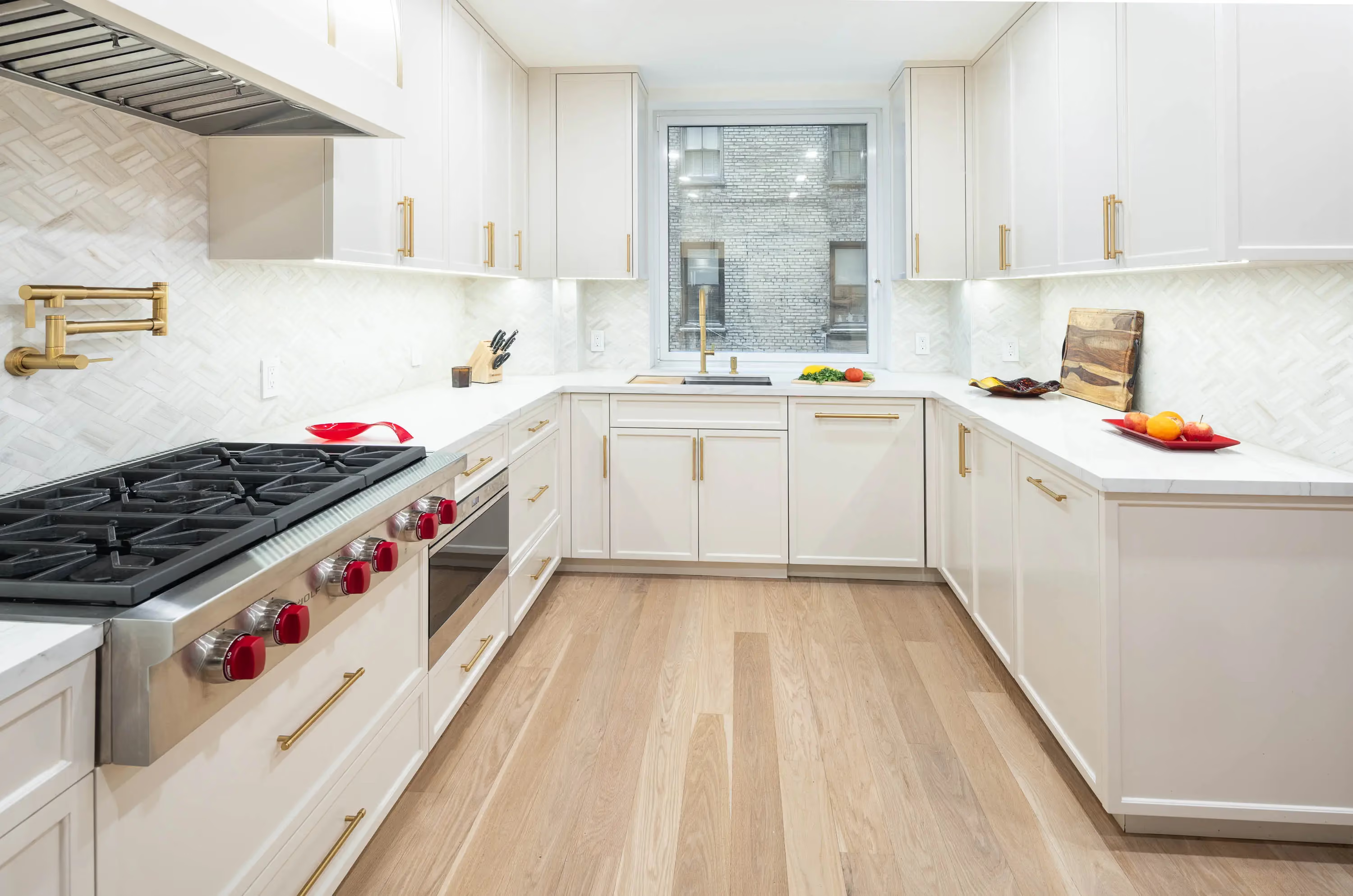
Window replacement is one of the most common requests in older penthouses, and one of the most variable in terms of what is actually permitted and what it costs. The method your building allows, whether the building is landmarked, and whether the windows face the street or a private terrace all affect the answer.
Frame-to-Frame vs. Brick-to-Brick
Frame-to-frame replacement inserts a new window inside the existing frame. It is faster, less expensive ($1,500 to $4,000 per window), and typically does not trigger a DOB permit. The catch: many co-op and condo boards prohibit it, and it only works if the existing frames are structurally sound. If the building does not allow it, or the frames are deteriorated, brick-to-brick is the only path.
Brick-to-brick removes the full window unit down to the masonry opening. It costs $4,000 to $12,000 or more per window, requires a DOB permit, and on a top-floor penthouse typically requires scaffolding or a man-lift for exterior access. In landmarked buildings, LPC review is also required. That said, it is the method that produces the best result: better insulation, better soundproofing, and a true upgrade rather than an insert.
Terrace-Facing Openings
Windows and doors that face a private terrace rather than the street are governed by different rules. Because they do not affect the building's public facade, boards are generally more flexible about enlarging openings, altering door placements, or installing floor-to-ceiling glass in these locations. This is a meaningful advantage in penthouse renovations where the goal is maximizing light and access to outdoor space. You still need board approval, but the conversation is different.
Landmarked Penthouses: Hidden Flexibility With Window Replacements
Penthouses in landmarked buildings are frequently set back from the building's street-facing facade, which means the LPC may not have the same jurisdiction over them that it does over lower floors. In practice, this means some setback penthouses qualify for more flexibility on window and door modifications than you might expect in a landmarked building. This is not universal: each building's master plan governs, and some enforce preservation rules across all floors regardless of visibility. Confirm with the LPC and building management before scoping, but do not assume landmark designation forecloses the options you want.
For more on window replacements during NYC renovations, read our blog, Ins & Outs Of Window Replacement For NYC Apartment Renovations.
[#2]Electrical Upgrade[#2]
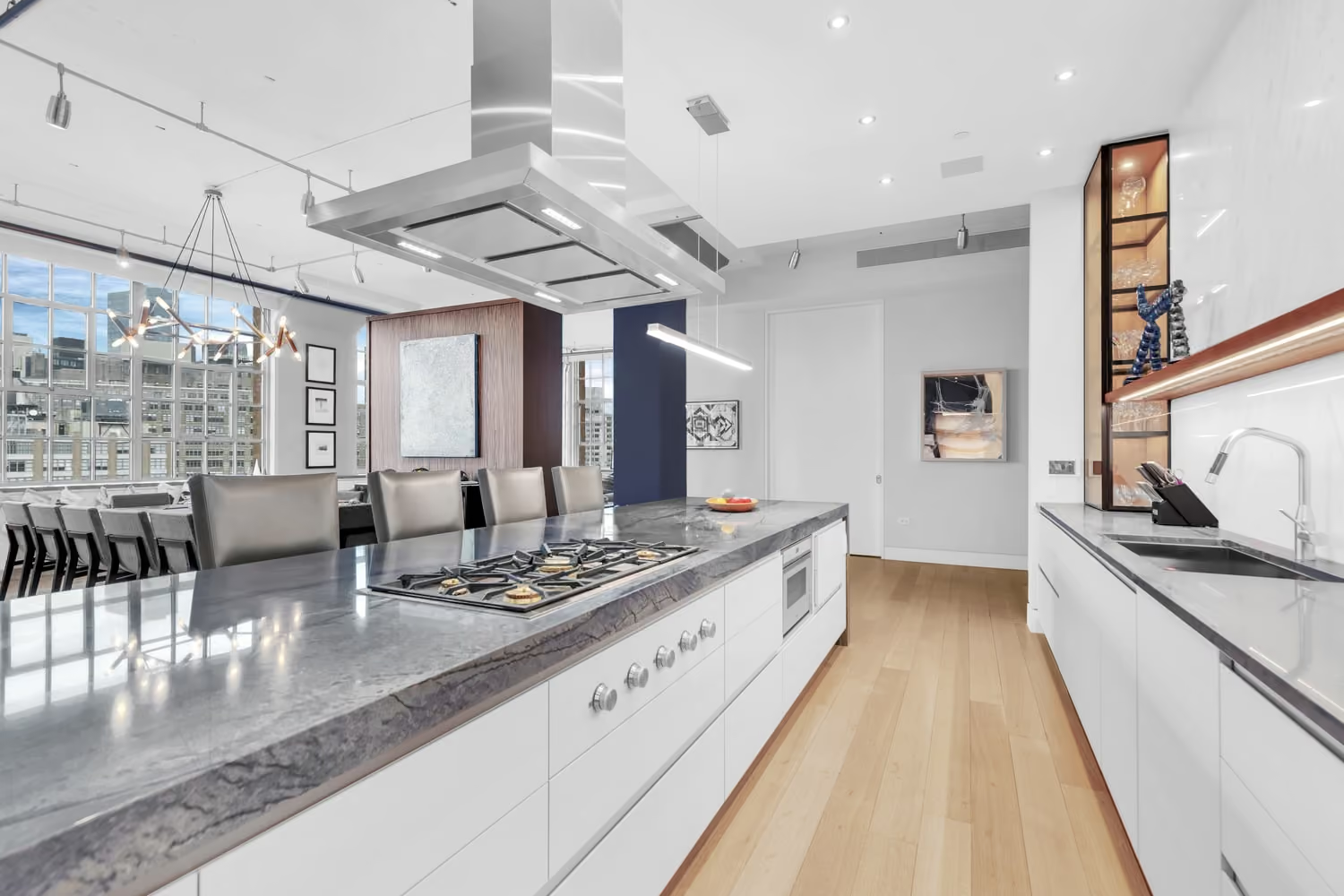
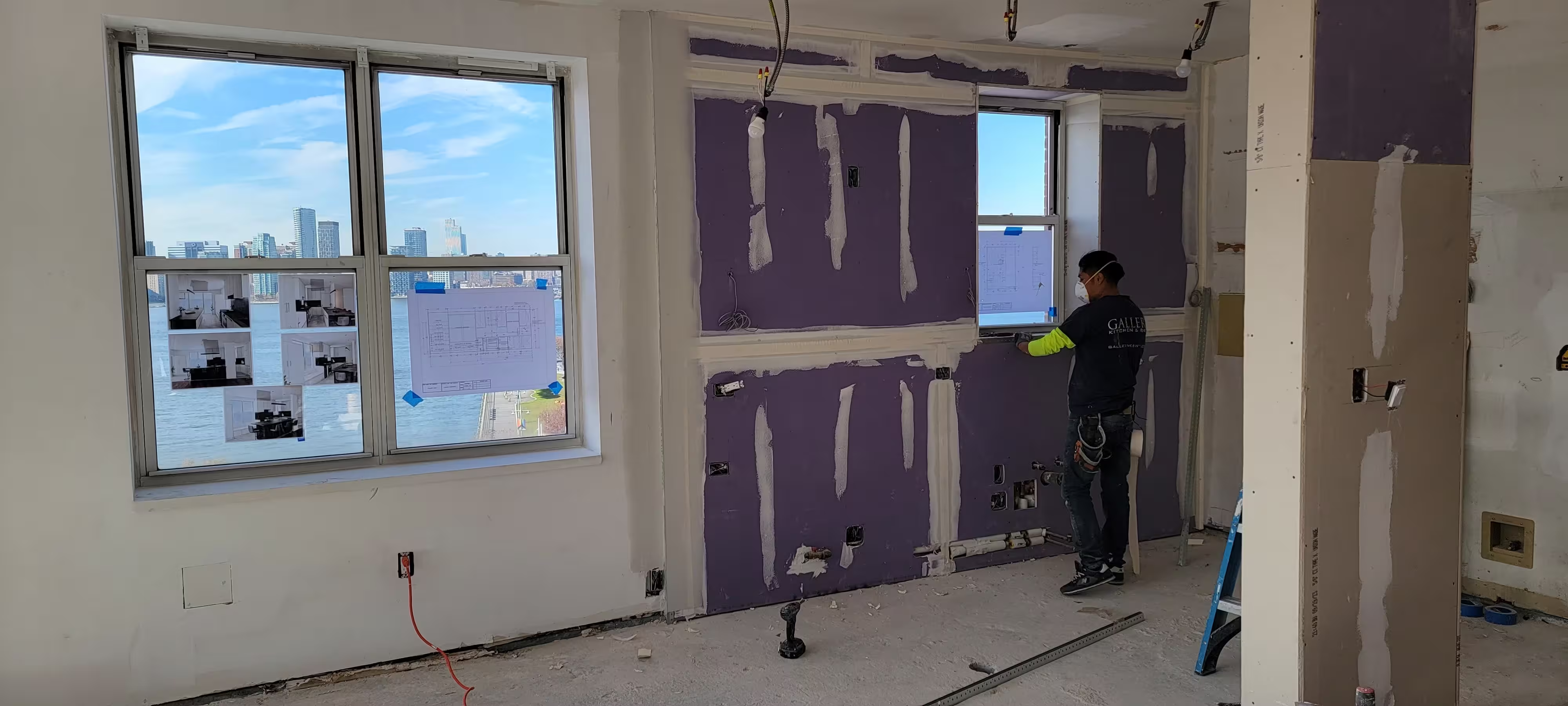
When planning a penthouse renovation in Manhattan, one of the first—and most essential—questions to address is the electrical system. Many older NYC apartments come with limited electrical service, typically ranging from 40-60 amps. However, for a full penthouse renovation, upgrading to 200 amps is often required to meet modern demands, such as induction cooking, advanced HVAC systems, and high-end appliances. This upgrade is not a one-size-fits-all situation, as the process is influenced by both the building’s infrastructure and the complexity of your specific renovation.
Feasibility: Can the Building Accommodate an Electrical Upgrade?
Before you begin, make sure to confirm whether the building’s existing infrastructure can support the desired amperage you’re aiming for. This is particularly important in older buildings, where the electrical systems may not have been designed for the needs of a modern penthouse. Consulting with both your renovation partner and building management is a crucial early step to ensure you have the right resources and permissions in place to accommodate the electrical needs of your renovation.
The unfortunate fact is some older buildings in Manhattan may have outdated or insufficient electrical systems that are unable to support a 200-amp upgrade. Additionally, the space and access required for installing a larger electrical service may not be available in certain buildings, particularly those with complex layouts or restrictive building codes.
For all renovations looking to add ample amperage, an in-depth feasibility study is required before committing to an upgrade. Work closely with your contractor and building management to assess whether there’s enough space for the necessary electrical conduits and whether the building’s existing infrastructure can handle the increased load. Some buildings may require a comprehensive review of the electrical system, which could involve working with the Department of Buildings or a licensed electrician to ensure your renovation complies with safety codes and regulations.
Costs of Electrical Upgrades for Penthouses
The cost of upgrading the electrical system in a NYC penthouse depends on several factors. Not only do you need to consider the price of upgrading the service panel to 200 amps, but you also need to account for the cost of installing new wiring and potentially running longer electrical lines to reach the penthouse. For top-floor penthouses, the challenge often lies in the increased distance between the riser (where the building’s electrical lines connect) and the penthouse. The higher the penthouse, the more expensive and complex installation methods may be required due to the vertical distance, making the process both labor-intensive and costly. Before banking on maximum electrical for your NYC penthouse renovation, consider working with a design-build firm like Gallery who can help navigate these costs and streamline the upgrade process while keeping everything within your budget expectations.
For more on electrical updates during NYC renovations, read our blog, The Essential Guide to Electrical Updates in NYC Apartment Renovations.
[#3]Gas Stove Relocations[#3]
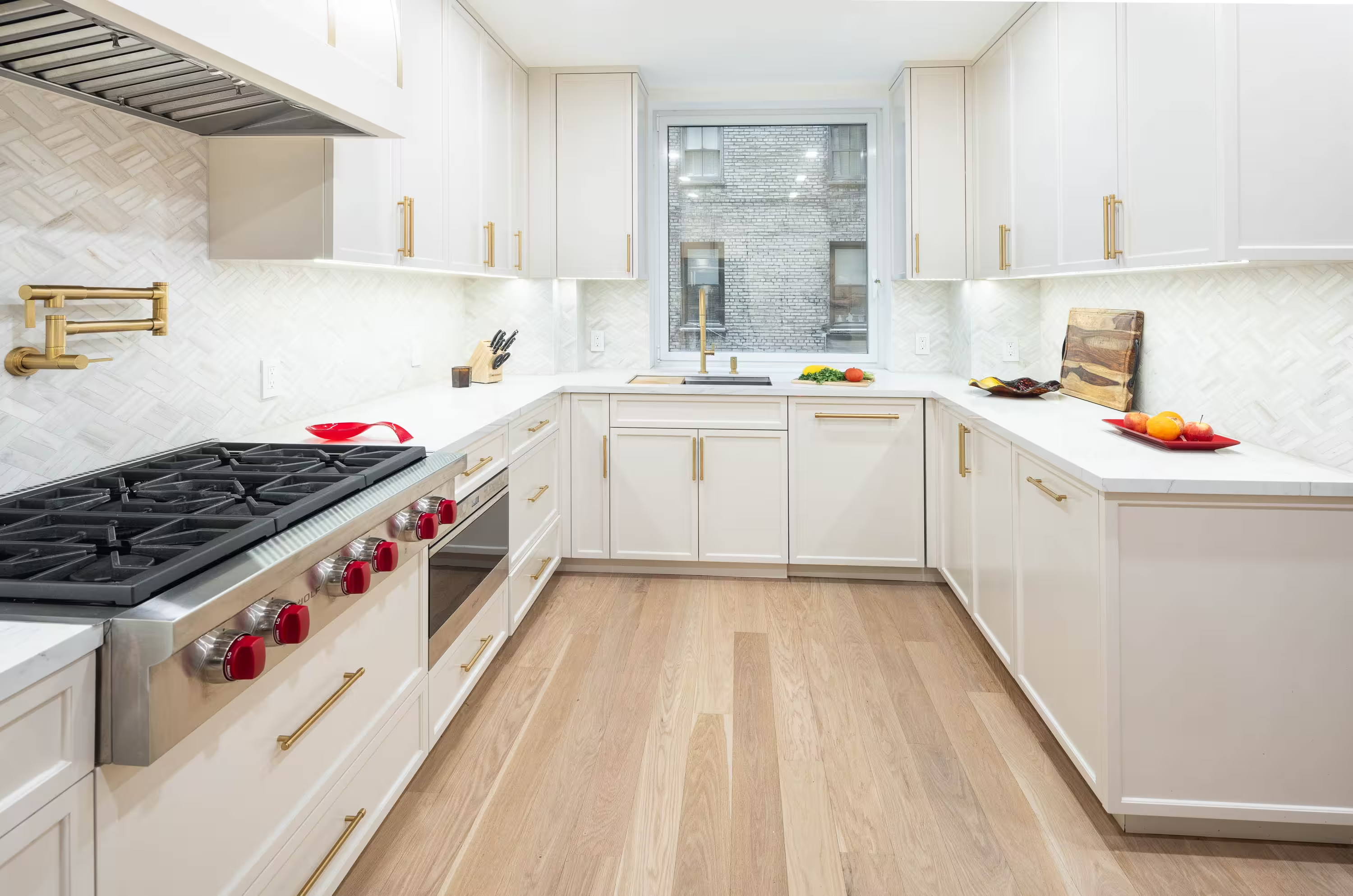
Moving a gas stove more than two to four feet from its existing location triggers a mandatory pressure test by a licensed master plumber. That requirement applies to any apartment in NYC, but in a penthouse it is compounded by the fact that gas lines have to travel further to reach the riser, increasing the piping run and the cost.
For penthouses in NYC, these challenges are compounded by each unit’s peak location. Extending gas lines to reach the riser can require longer piping runs, increasing material and labor costs. This added complexity often requires a firm assessment of whether a gas stove relocation is truly worth the investment or if alternative solutions - such as upgrading to an induction cooktop, like the one we installed in our Manhattan condo renovation at 252 Seventh Ave - might be a better fit. At Gallery, we assess whether the relocation is feasible within the building's constraints and what it will cost., before finalizing a kitchen layout. In cases where the move is impractical or prohibitively expensive, an induction cooktop is a legitimate and increasingly common alternative. Induction requires adequate electrical capacity, which the 200 amp upgrade addresses, and eliminates the gas relocation problem entirely. The decision depends on the client's preference and the specifics of the building.
For more on Gallery’s full-service design-build approach and approach to penthouse renovations in NYC, read The Gallery Way.
Understanding Pressure Tests and Building Regulations
Any gas line modification in NYC requires a pressure test conducted by a licensed plumber, approved by the Department of Buildings, and coordinated with building management. Some co-op and condo boards impose additional restrictions on gas modifications beyond DOB requirements, and a small number prohibit gas relocations altogether. Confirm the building's policies before including a gas stove relocation in your renovation scope.
.webp)
[#4]Custom HVAC Availability[#4]
The penthouse position, specifically access to private outdoor space or a rooftop, unlocks HVAC options that most Manhattan apartments cannot use. The best residential HVAC systems available require outdoor condenser placement. Lower-floor apartments usually cannot accommodate this. A penthouse with a terrace can.
VRF and VRV systems offer room-by-room temperature control, whisper-quiet operation, and the highest energy efficiency of any residential system currently available. They typically cost $30,000 to $80,000 for a full penthouse scope, but the performance difference versus a standard system is significant, especially in a high-end renovation where the rest of the finishes are at that level.
When Outdoor Space Is Not Available
If the building does not permit outdoor condenser placement, a ducted split system is the next best option. This requires ceiling cavity for ductwork, which is where pre-war penthouses can be constraining. Many pre-war buildings have original construction details that limit ceiling cavity depth. When the cavity is too shallow for standard ductwork, a slim-duct system or a hybrid approach combining ducted and ductless zones is the solution. The design has to be worked out before construction starts, not after the ceiling is opened.
Read more about our custom HVAC solutions via our blog, Why Custom HVAC Solutions Are Essential For Pre-War Renovations In New York City.
[#5]Wet Over Dry Exemptions[#5]
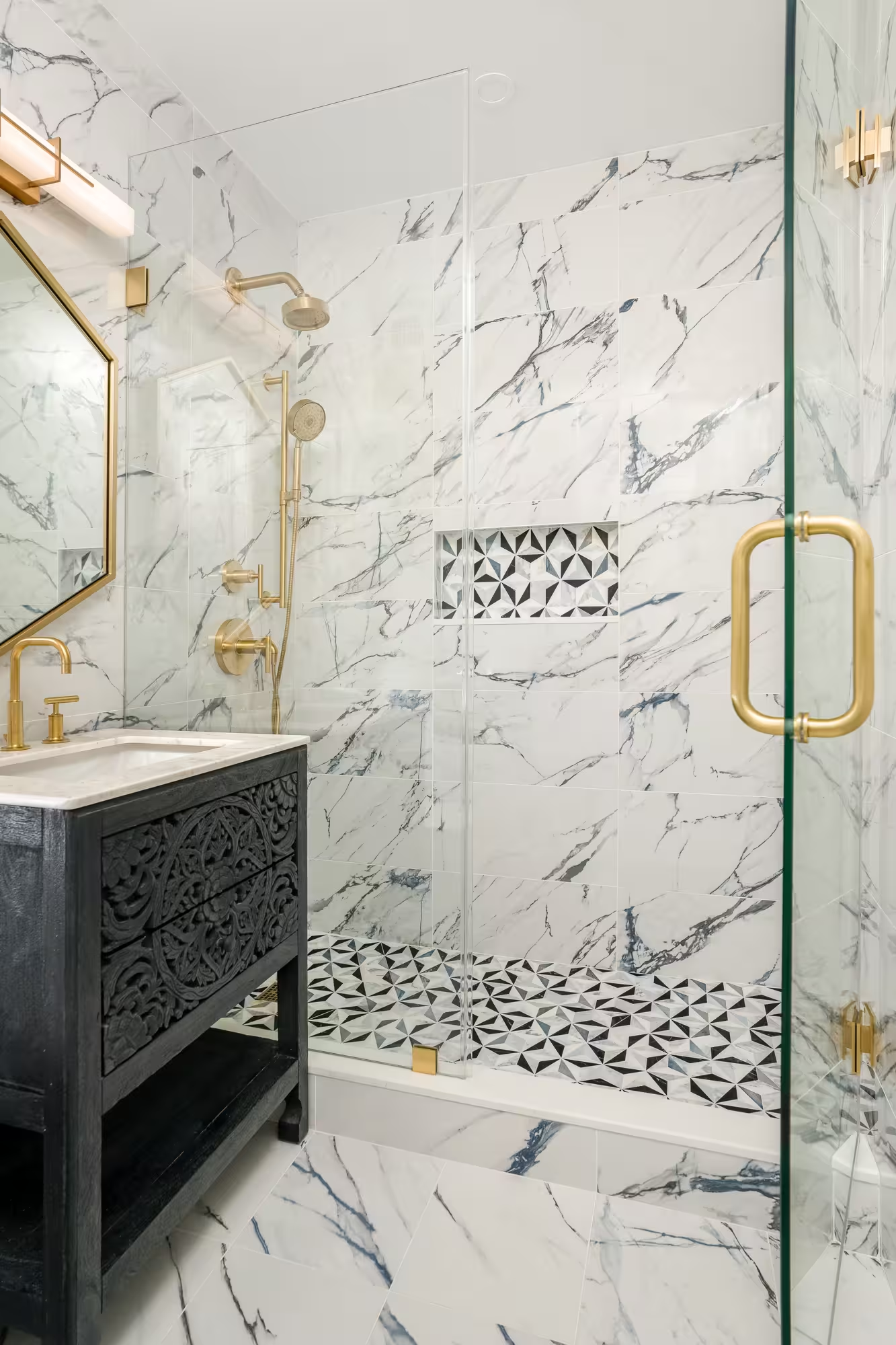
Buildings in NYC generally prohibit placing plumbing in a location that sits above a room without plumbing below it. This wet-over-dry restriction is a significant obstacle in some renovation layouts. In a penthouse, there is a legitimate path to requesting an exemption that does not exist for lower floors, and it is worth understanding how to make that case effectively.
The argument is straightforward: if your existing bathroom or kitchen already sits above a dry area in the unit below, the wet-over-dry condition is already present. The board cannot object to a condition that has existed throughout the building's history. With proper documentation, an architect who can communicate this to the board clearly, and in some cases a structural engineer's sign-off, boards often grant the exemption. A poorly prepared request gets a quick rejection. A well-prepared one frequently gets approved.
The cost of pursuing this involves architecture fees for documentation, potentially a structural engineer, and the time it adds to the board approval process. We walk clients through this when it applies and prepare the submission to give it the best chance of approval.
[#6]Outdoor Space Design & Enhancements[#6]
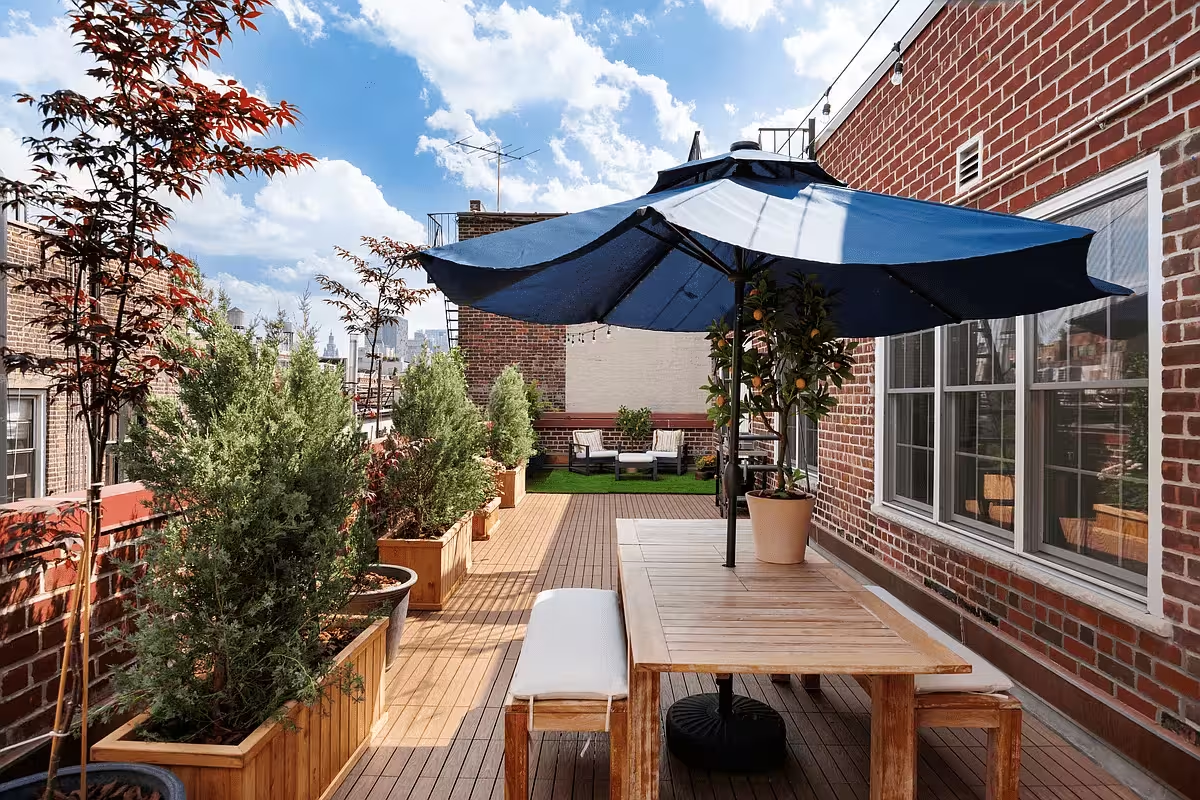
Penthouse terraces in Manhattan are rare. When a renovation includes one, the outdoor scope deserves the same planning rigor as the interior. The most common mistakes are treating it as an afterthought and not planning utilities early enough.
Outdoor Flooring
Elevated pedestal flooring is the standard approach for penthouse terraces. The system sits above the roof membrane, allows proper drainage, and protects the building's waterproofing from foot traffic and furniture. Material options include porcelain tile, ipe wood, and composite decking, with installed costs ranging from $40 to $120 or more per square foot depending on material. We use pedestal systems on every terrace renovation we do.
Gas & Fire Features
An outdoor gas fireplace or built-in grill can anchor a terrace renovation, but both require navigating NYC code and building-specific rules. Outdoor gas appliances require a DOB permit, master plumber sign-off, and board approval. Many buildings restrict or prohibit outdoor gas entirely. Where gas is not permitted, electric grills and fire features are available alternatives and have improved meaningfully in quality over the last several years.
Lighting & Water
Running a water line to the terrace for an outdoor bar or irrigation system requires board approval and should be planned in pre-construction. Retrofitting water access after other work is complete is significantly more expensive. The same is true for conduit for outdoor lighting, which should be roughed in before flooring is installed. Both of these are easy to include when walls and floors are open and expensive to add later.
Final Considerations
The six areas above account for most of what makes a penthouse renovation more complex and more expensive than a standard floor renovation. Some of them, particularly HVAC options and terrace access, also represent genuine advantages that a top-floor position provides. The difference between a penthouse renovation that goes smoothly and one that runs into problems is almost always in how thoroughly the pre-construction planning addressed these variables before work started.
Considering a penthouse apartment renovation in New York City? View our portfolio of NYC apartment renovation before and afters, learn more about Gallery, or contact us today.
We are an award-winning design-build firm in New York City with a full-service approach to renovations in Manhattan and Brooklyn that includes everything from interior design and architecture services to filing permits and construction management. We’re experts in pre-war apartment renovations, apartment combinations, room creations, full gut renovations and all that falls in between. Let us bring your dream home to life.
%20Gallery%20KBNY.webp)
[#FAQ]Frequently Asked Questions About Penthouse Renovations In NYC[#FAQ]
How much does it cost to renovate a penthouse in Manhattan?
A full gut renovation of a Manhattan penthouse typically runs $700 to $1,000 or more per square foot given the complexity and finish level typical of penthouse projects. Penthouse-specific costs on top of the base renovation include electrical upgrades ($8,000 to $25,000 or more depending on riser distance), window replacements ($4,000 to $12,000 per window brick-to-brick), HVAC systems ($30,000 to $80,000 for a VRF system), and terrace work if applicable ($40 to $120 per square foot for pedestal flooring plus utilities). The total depends heavily on scope, building type, and floor level.
Do penthouse renovations require different permits than other NYC apartments?
The base permit requirements are the same: DOB filing for any structural, MEP, or major alteration work, plus co-op or condo board alteration agreement. The differences are in what triggers additional review. Brick-to-brick window replacements at the top floor typically require exterior access equipment and sometimes engineering sign-off on anchoring. Landmarked buildings require LPC review for window or facade work regardless of floor. Rooftop mechanical equipment for HVAC may require a separate DOB filing. And pre-1987 buildings require ACP-5 asbestos clearance before any wall opening, the same as any other renovation.
Can I add a rooftop terrace or expand my penthouse terrace during a renovation?
Expanding or adding terrace space requires both building board approval and in most cases DOB filing. The feasibility depends on the building's roof structure, the co-op or condo board's willingness, and in landmarked buildings, LPC review. Setback penthouses that are not visible from the street sometimes have more flexibility with the LPC than lower-floor work in the same building. The building board is typically the primary gatekeeper. We assess terrace expansion feasibility as part of the pre-construction process.
What HVAC system is best for a Manhattan penthouse renovation?
Where outdoor condenser placement is available on a private terrace or with rooftop approval, a VRF or VRV system is the best option available for residential use. It offers room-by-room temperature control, the lowest operating noise, and the highest energy efficiency. For penthouses without outdoor condenser access, a ducted split system is the next choice if ceiling cavity allows. Where ceiling conditions are constrained, a mini-split ductless system or hybrid approach is the practical alternative. The right answer depends on what the building permits and what the existing ceiling heights can accommodate.
How does the wet-over-dry rule affect a penthouse renovation?
Wet-over-dry restrictions prohibit placing plumbing above rooms that do not have plumbing below. In a penthouse, if the existing bathroom or kitchen already sits above a dry area in the unit below, there is a legitimate basis for requesting an exemption since the condition already exists. Making that case effectively requires architectural documentation, sometimes a structural engineer, and a clear submission to the board. A well-prepared request frequently gets approved. We guide penthouse clients through this process when their desired layout involves a plumbing relocation that crosses a wet-over-dry condition.
let’s
Design-Build
together

%20Gallery%20KBNY.avif)