.avif)


.png)
.png)


Ins & Outs Of Window Replacement For NYC Apartment Renovations
Explore the ins and outs of NYC window replacements, with insights on methods, regulations, and installation tips to simplify this complex process.
November 11, 2025
|
.avif)
Ins & Outs Of Window Replacement For NYC Apartment Renovations
Peek into the world of window replacements amidst NYC renovations, where we wipe away confusion about this complicated process via tips on methodology, building regulations and questions to ask your general contractor before hiring.
Table of contents
- Why Are Window Replacements in NYC So Costly?
- Special Window Types And Features
- Building-Wide Replacement Programs And Special Assessments
- Essential Questions For Your General Contractor When Hiring For Your NYC Renovation With Window Replacements
- Gallery’s Approach To NYC Window Replacement
- Frequently Asked Questions About Window Replacement in NYC Apartment Renovations
New York City is known for its architectural beauty—from historic brownstones to soaring skyscrapers. Yet, even though many homeowners mainly consider their interiors when renovating, the challenges of maintaining the eccentricities of their exterior often comes as a surprise. To help homeowners considering a condo or co-op renovation with window replacements, we’ve created a guide to help set expectations for the high costs, regulatory hurdles, and logistical challenges that come with replacing your windows.
Gallery KBNY is an award-winning, full-service design-build firm specializing in the architecture, interior design, and renovation of apartments, co-ops, condominiums, townhomes, and lofts across Manhattan and Brooklyn. Our integrated team of architects, designers, contractors, and project managers manages every phase from board approvals and DOB permitting through design and construction. A founding partner is involved in every project, start to finish. Because architecture, design, permitting, and construction are coordinated under one roof, the process remains streamlined, accountable, and transparent from start to finish. Our work has been recognized by Forbes, The New York Times, Architectural Digest, and Inc., and we have received Houzz Best of Design & Service seven consecutive years, along with 100+ five-star client reviews.
With practical insights and expert guidance, you’ll have a better understanding of the ins & outs of window replacement during NYC renovations, helping you approach your project with crystal clear confidence.
.webp)
[#1]Why Are Window Replacements in NYC So Costly?[#1]
Unlike private homes, window replacements in NYC co-ops and condos are significantly more expensive due to a number of factors including requirement of customized windows, building regulations, insurance requirements, and other factors. Pricing out window replacement in an apartment building can be shocking for those accustomed to typical residential home costs. NYC buildings often mandate certain materials, designs, and standards to uphold the city’s unique architecture and building rules, which drives up both material and installation costs.
Determining Your Vendor Options
In many NYC buildings, window replacements come with specific vendor requirements, which can affect your options and budget:
Building-Specified Vendors
Some buildings mandate the use of approved vendors, such as Skyline or Panorama, to ensure compliance with their standards. In these cases, homeowners have two options:
- Work directly with the designated vendor for installation
- Engage a full-service renovation firm like Gallery to manage vendor coordination within the broader renovation scope
Open Vendor Policy
Other buildings offer more flexibility, allowing homeowners to select any licensed and insured vendor. While this can sometimes reduce costs, the overall expense remains high due to NYC’s bloated building requirements.
Replacement Methods: Frame-To-Frame vs. Brick-To-Brick
Not every window renovation is created equal. There are two main types of window replacement and the method you choose impacts both the cost and disruption level you’re willing to accept. Listen as Avi explain the differences between the two processes in depth above via the Ask Avi series on our IG channel, then read more on the topic below.
Frame-To-Frame Replacement
This approach involves minimal disruption as it keeps the original window frame intact. Frame-to-frame replacements are often more straightforward and budget-friendly, involving only the new windows and installation.
Brick-To-Brick Replacement
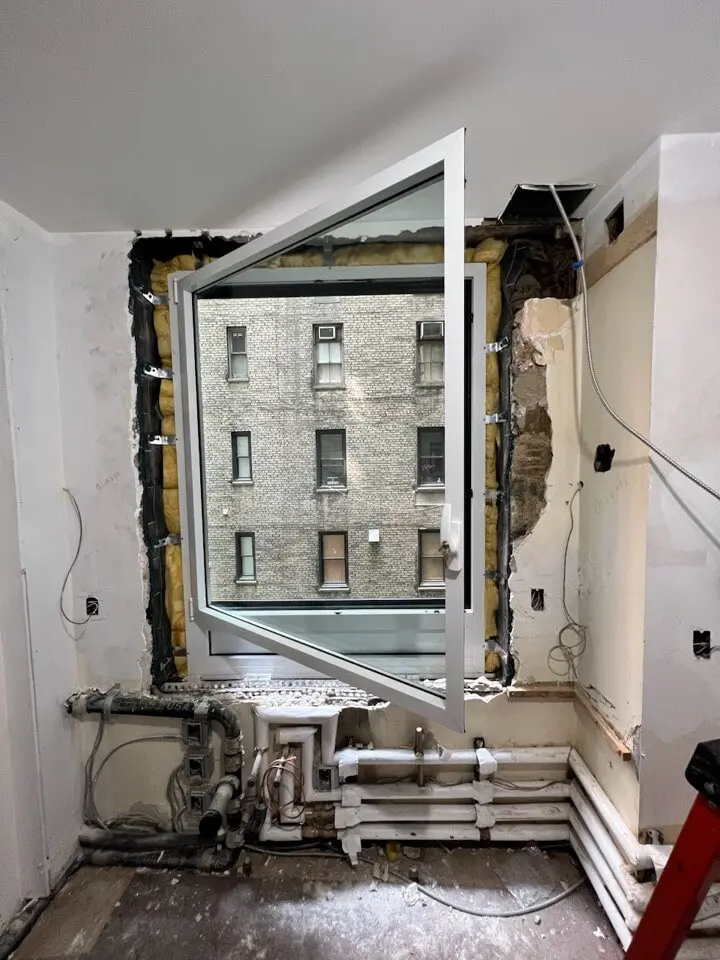
This method is much more invasive, requiring complete removal of the window structure, including the frame. There’s also additional work, such as plaster repair, all of which increases both time and cost involved. However, the added necessity often proves worthwhile, as brick-to-brick replacements provide enhanced energy efficiency and can restore a building’s original appearance, which is ideal for historic renovations.
Frame-To-Frame Vs Brick-To-Brick Window Replacement In NYC
| Factor | Frame-To-Frame | Brick-To-Brick |
|---|---|---|
| Scope Of Work | Original window frame stays in place. New sash, glass, and hardware installed within the existing frame. | Complete removal of the existing window structure including the frame. Surrounding masonry and plaster typically requires repair. |
| Typical Cost Range | $1,500 to $3,500 per window installed, depending on size and specification. | $3,000 to $7,500+ per window installed, including masonry repair and plaster patching. |
| Typical Lead Time | 6 to 10 weeks from order to installation, faster for stock-size building-specified vendors. | 10 to 16 weeks accounting for custom fabrication, LPC approvals when required, and longer installation phases. |
| Disruption Level | Minimal. Installation typically completes in one day per window with limited dust and debris. | Significant. Two to three days per window with masonry work, plaster repair, and finish restoration required afterward. |
| Energy Performance | Improved over original single-pane sash, but limited by retaining the existing frame which may have air leakage. | Maximum efficiency. New frame, sash, and seals deliver the best thermal and acoustic performance available. |
| Best Used When | Existing window frames are structurally sound, budget is constrained, and the project is a finish-tier update rather than a full envelope upgrade. | Frames are damaged or non-original, the building requires it, full energy upgrade is desired, or the renovation is a gut where walls are open anyway. |
| Historic District Notes | Often acceptable in landmark districts when the original frame is the historic element being preserved. | Required in landmark districts when restoring original window profiles or returning a non-original window to historical specification. |
Source: Gallery KBNY window replacement project data, Manhattan and Brooklyn (2026). Cost ranges reflect typical apartment-scope installations including window unit, installation, and standard repair work; building-specific vendor requirements, custom specifications, and landmark restrictions may shift figures within each category.
Navigating Landmark And LPC Requirements
If your building is in a historic district or holds landmark status, additional steps are necessary to maintain that age-old architectural integrity:
LPC Approval Process
For landmarked buildings, approval from the Landmarks Preservation Commission (LPC) is mandatory, adding another layer of review on top of Department of Buildings (DOB) permits. This can increase both the time and cost required.
.webp)
Specialized Windows
Landmark status often requires specific window styles or materials that match the historical character of the building, which can also add to your project’s expense.
Learn more about landmark renovations in NYC via our blog Everything You Need to Know About Landmark Renovations In NYC.
What Drives The Cost Of NYC Apartment Window Replacement
| Cost Driver | When It Applies | Typical Added Cost | Why It Matters |
|---|---|---|---|
| Base Window Unit & Installation | Always | $1,500 – $3,500 per window | The foundational cost. Custom sizing required in most pre-war buildings adds significantly above stock residential pricing. |
| Building-Approved Vendor Requirement | Many Buildings | 10 – 25% premium | Buildings that mandate specific vendors (Skyline, Panorama, others) eliminate competitive pricing options and concentrate volume with one supplier. |
| Landmark Or LPC Compliance | Historic Districts | $2,000 – $5,000+ per window | Custom profiles matching historic specifications, restricted material options, and LPC application fees and review timelines all add cost. |
| Lot Line Fireproofing | Property-Line Windows | $1,000 – $3,000+ per window | Fire-rated assemblies, specialized framing, and acoustic upgrades add cost and lengthen lead times for windows along property lines or shared walls. |
| Brick-To-Brick Method Premium | Full Frame Replacement | $1,500 – $4,000+ per window | Frame removal, masonry repair, plaster patching, and finish restoration all add to the base installation cost. |
| Smart, Soundproof, Or UV Features | Optional Upgrades | $500 – $2,500+ per window | Premium glazing, integrated automation, and specialized coatings deliver real performance gains but at meaningful added cost. |
| Building Coordination & Insurance | Always | $5,000 – $15,000+ project | Certificate of insurance riders, common area protection fees, elevator reservations, board approvals, and after-hours work charges accumulate quickly. |
| DOB Permits & Architectural Filings | Always | $2,500 – $7,500 project | Most window replacements require DOB permits. Filings, architectural drawings, and structural review by a licensed professional are all required. |
Source: Gallery KBNY window replacement project data, Manhattan and Brooklyn (2026). Per-window costs reflect typical apartment-scope installations under a full-service design-build engagement; building-specific requirements, custom specifications, and landmark restrictions may shift figures within each category.
[#2]Special Window Types And Features[#2]
Certain window types and features come with added complexity and cost considerations in NYC:
Lot Line Windows
Windows positioned along property lines or shared walls require enhanced fireproofing and noise reduction features, making them more costly with longer lead times due to specific material requirements.
Additional Features
Window technology has leveled up in recent years and now windows in NYC apartments can be outfitted with special features such as UV protection, soundproofing, or smart technology. While these add comfort and functionality, they also come at a premium. For more information on smart window technology and options, read our popular blog Renovations & Technology: 10 Smart Home Remodeling Ideas.
[#3]Building-Wide Replacement Programs And Special Assessments[#3]
In some co-op or condo buildings, window replacement is a collective project. So, before you take on full costs yourself, consider the following building-specific considerations.
Cost Inclusion
Buildings may cover the expense through maintenance fees or a special assessment, which is an additional fee that covers the renovation costs. Hey, why not?
Special Assessments
If you’re a prospective buyer, you might ask about any requirements for building-wide window replacements to avoid unexpected costs after moving in.
[#4]Essential Questions For Your General Contractor When Hiring For Your NYC Renovation With Window Replacements[#4]
While we have a specific blog catering to 10 Questions To Ask A NYC General Contractor Before Hiring, here are some window-centric questions to note when preparing to hire a contractor for NYC renovations.
Are There Vendor Restrictions?
Some buildings are strict about the windows you use upon replacement. Before making any selections, determine if your building mandates specific vendors or if you have more freedom in choosing one.
Which Replacement Method Is Required?
As discussed, there are benefits to both brick-to-brick and frame-to-frame window replacements. Preference aside, your renovation may actually call for one or the other depending on the requirements of your building. To handle the replacement properly, ask your potential renovation contractor exactly which route they feel is required or what route your building mandates. A full-service design-build contractor will not only answer this for you, they’ll speak with your building to confirm the route is approved.
What Are The Lead Times?
Certain window types and compliance requirements may lengthen production and installation times. If the window replacements are part of a larger renovation and you’re working with a design-build general contractor like Gallery, extended lead times for windows will be a non-factor, as various other aspects of the renovation will be moving forward amidst the wait.
What To Confirm Before Quoting NYC Window Replacement
Some NYC buildings require specific vendors like Skyline or Panorama. Others allow any licensed and insured vendor. The answer determines pricing flexibility and lead time.
A mandated vendor eliminates competitive bidding and sets the floor for what your window unit cost will be. Building open to any licensed vendor often unlocks meaningful cost savings.
Many buildings mandate one method based on facade composition, historic status, or board preference. Asking upfront prevents quoting against a method the building will not approve.
Brick-to-brick costs significantly more than frame-to-frame because of masonry repair, plaster patching, and longer installation phases. The method drives the per-window unit cost more than almost any other factor.
Confirm landmark district status with NYC Landmarks Preservation Commission. Common districts include Brooklyn Heights, Park Slope, Bedford-Stuyvesant, Upper East Side, and West Village.
LPC approval is required in addition to DOB permits in historic districts. The review cycle adds two to four months to the timeline and restricts material and style options.
Windows along property lines or shared building walls require fire-rated assemblies and enhanced acoustic specifications. These are not optional upgrades but DOB-mandated for the position.
Lot line windows add per-window cost and extend lead time because they require custom fire-rated fabrication. Identifying these in pre-construction prevents discovery during installation.
Some co-ops and condos run building-wide window replacement programs funded by maintenance fees or special assessments. Confirms whether unit-level replacement should proceed or wait for the building program.
Replacing windows at the unit level just before a building-wide program means paying twice. Waiting for the program or coordinating with it can substantially reduce the homeowner's out-of-pocket cost.
Source: Gallery KBNY window replacement assessment workflow, Manhattan and Brooklyn (2026). Checks reflect typical pre-construction due diligence for apartment-scope window replacement projects under a full-service design-build engagement.
[#5]Gallery’s Approach To NYC Window Replacement[#5]
At Gallery, window replacements within larger NYC renovations are made effortless for clients, thanks to our comprehensive design-build approach. From vendor selection to securing permits, our team manages every detail of your project, including window selection and compliance within your building.
Our process begins with a thorough assessment of your home and windows, followed by strategic planning to integrate your window replacement into the larger renovation. With experience in handling all styles of NYC renovations, we streamline the project, providing a single point of contact to make communication and coordination seamless.
Considering an apartment renovation in New York City that requires window replacement? View our portfolio of NYC apartment renovation before and afters, learn more about Gallery, or contact us today.
We are an award-winning design-build firm in New York City with a full-service approach to renovations in Manhattan and Brooklyn that includes everything from interior design and architecture services to board approvals plus permits and construction site management. We’re experts in pre-war apartment renovations, apartment combinations, room creations, full gut renovations and all that falls in between. Let us bring your dream home to life.
[#FAQ]Frequently Asked Questions About Window Replacement in NYC Apartment Renovations[#FAQ]
How Much Does Window Replacement Cost in a NYC Co-Op or Condo?
Window replacement in NYC co-ops and condos carries a materially higher per-unit cost than window replacement in private homes, and the gap is driven by factors specific to multi-unit residential buildings. At the lower end, a standard frame-to-frame replacement in a building with an open vendor policy and no landmark requirements typically runs $1,500 to $3,500 per window depending on size, glass specification, and the complexity of the opening. Brick-to-brick replacement, which involves removing the full window assembly including the frame, patching the masonry surround, and installing a new unit, typically runs $4,000 to $8,000 or more per window due to the additional masonry, plaster, and finish work involved. Buildings that mandate approved vendors, require specific glass types for noise or fire rating, or sit in landmark districts where historically-matched units must be specified push costs toward or above the upper end of these ranges. For a full apartment with eight to twelve windows, total window replacement costs of $30,000 to $80,000 or more are common in Manhattan and Brooklyn renovations involving brick-to-brick scope and landmark compliance.
Do Window Replacements in NYC Apartments Require a DOB Permit?
Window replacements in NYC co-ops and condos require a DOB permit when the scope involves any of the following: structural modification to the window opening, changes to the overall size or configuration of the opening, removal and replacement of the full frame in a brick-to-brick scope, or work on a facade element in a landmarked building or landmark district. Frame-to-frame replacement that involves swapping the sash and glass within an existing intact frame is often considered a minor alteration and may proceed without a full DOB permit, though building management typically requires documentation of the work regardless. LPC approval is required before DOB filing for any facade modification in a designated landmark building or historic district, and this includes brick-to-brick window replacements in pre-war buildings with landmark status. Confirming the specific permit requirements for the building and the proposed scope with the managing agent and a licensed architect before work begins avoids the delay and cost of retroactive permitting.
Who Is Responsible for Window Replacement in a NYC Co-Op vs. a Condo?
Responsibility for window replacement in NYC co-ops and condos is governed by the proprietary lease or the condominium offering plan respectively, and the answer differs meaningfully between the two ownership structures. In most NYC co-ops, windows are treated as a common element of the building's exterior facade, which means the co-op corporation is technically responsible for their maintenance and replacement. In practice, individual shareholders are often required to pay for replacement as part of a renovation or are assessed collectively through a building-wide replacement program funded by a special assessment. In condos, windows are typically the responsibility of the individual unit owner, since each owner holds title to their unit and its boundaries, including the window frames. The precise boundary between unit owner responsibility and building responsibility should be confirmed in the proprietary lease or offering plan before budgeting for a window replacement project, since assuming one party's responsibility when it belongs to the other creates cost surprises that could have been identified through a document review before the purchase or the renovation planning process begins.
What Is the Difference Between Frame-to-Frame and Brick-to-Brick Window Replacement in NYC?
Frame-to-frame replacement retains the original window frame in place and installs a new sash and glass unit within the existing frame dimensions. The surrounding masonry, plaster, and interior casing are largely undisturbed. This approach is faster, less disruptive, and less expensive. The tradeoff is that the replacement window is constrained by the dimensions and condition of the original frame, and any deterioration in the frame itself, warping, rot, failed weatherstripping channels, or compromised structural connection to the masonry, is carried forward into the new installation. Brick-to-brick replacement removes the entire window assembly including the frame, allows the rough opening to be cleaned, flashed, and weather-sealed from scratch, and installs a new unit into the original masonry opening. The surrounding plaster or drywall requires patching and refinishing after the new frame is installed. Brick-to-brick is appropriate when the existing frame is structurally compromised, when energy performance demands full perimeter sealing that the existing frame cannot provide, when the building requires it by alteration agreement, or when historic restoration calls for complete window unit replacement.
How Do Landmark and Historic District Requirements Affect Window Replacement in NYC?
Buildings within New York City Landmarks Preservation Commission designated historic districts or holding individual landmark status require LPC review and approval before any window replacement work can begin. The LPC's standard for window replacement in landmark buildings requires that new windows match the original in profile, material, finish, and operation type. For most pre-war buildings in historic districts, this means wood or steel frame windows with true divided lights or simulated divided light profiles that replicate the original sash pattern. Aluminum replacement windows with generic profiles are routinely rejected. Custom units that meet LPC specifications are manufactured to order, which extends lead times to twelve to twenty weeks in many cases. LPC approval typically adds four to ten weeks to the pre-construction phase for a straightforward window replacement scope, with additional review cycles if the initial submission requires modification. Buildings in Brooklyn Heights, Greenwich Village, the Park Slope Historic District, and portions of the Upper West Side and Upper East Side are among the most commonly affected by these requirements. The LPC designation of a specific building can be confirmed through the NYC LPC map before any project planning begins.
What Are Lot Line Windows and Why Are They More Expensive to Replace in NYC?
Lot line windows are windows positioned in a wall that sits on or near a property line shared with an adjacent building or lot. NYC Building Code requires that windows in lot line walls meet elevated fire resistance ratings because they face a location where an adjacent structure could burn and radiate heat toward the window. Standard residential glass does not meet these ratings. Lot line windows must be specified with wired glass, fire-rated glass, or other assemblies that achieve the required fire protection classification. These materials are significantly more expensive than standard insulated glass units, have longer lead times due to specialty manufacturing, and in some cases require specific frame types to maintain the fire rating of the assembly. Buildings in dense urban blocks where adjacent buildings share a property line or come within close proximity on the east or west exposure are the most commonly affected. A window replacement scope that includes lot line windows should be identified and priced separately from standard window replacements at the planning stage, since the cost difference is substantial.
What Are the Lead Times for Custom Windows in NYC Building Renovations?
Lead times for replacement windows in NYC renovations vary by window type, specification, and whether landmark compliance or special fire ratings are required. Standard vinyl or aluminum replacement windows specified from stock profiles typically have lead times of four to eight weeks from order to delivery. Custom-sized units in standard materials run six to ten weeks. Windows specified to LPC requirements, whether wood-frame custom sash units or steel casement reproductions with historically accurate profiles, typically carry lead times of twelve to twenty weeks, and in periods of high demand or supply disruption that range extends further. Fire-rated lot line glass units and assemblies also carry extended lead times due to the specialty manufacturing involved. In the context of a larger renovation project managed by a design-build firm, window lead times are factored into the overall project schedule and windows are ordered at the start of the project so that delivery aligns with the rough-in or finish phase when installation occurs. When window replacement is planned as a standalone scope with shorter advance notice, lead time surprises are a common cause of project delays.
What Is a Building-Wide Window Replacement Program and Should You Ask About It Before Buying?
A building-wide window replacement program is a coordinated project in which the co-op or condo board undertakes replacement of all windows in the building under a single contract, typically funded through a special assessment charged to all shareholders or unit owners. These programs are common in older NYC buildings where the windows have deteriorated uniformly and the board determines that a building-wide approach is more cost-effective than individual unit replacements over time. From a buyer's perspective, a building-wide replacement program that has not yet been completed represents a future special assessment that will be charged to the new owner after closing. Asking the managing agent about any planned or pending window replacement programs, along with the estimated per-unit cost of the assessment, is a standard piece of due diligence that can materially affect the total cost of owning a unit in that building. A recently completed building-wide window replacement program, on the other hand, represents a capital investment that the buyer inherits without the associated cost, which is a meaningful advantage compared to buildings where windows are aging and individual replacement costs remain the owner's responsibility.
How Do You Preserve Original Window Casings and Interior Details During Window Replacement in a Pre-War Apartment?
Original window casings, apron trim, and interior plaster surrounds in pre-war apartments carry the same architectural value as original molding and hardwood floors, and protecting them during window replacement requires deliberate coordination between the window installer and the renovation team. Frame-to-frame replacement presents the least risk to interior details because the existing frame and surrounding trim remain in place. Brick-to-brick replacement, which removes the full frame assembly, requires the interior casing, plaster jamb returns, and apron trim to be carefully removed before frame extraction and reinstalled after the new frame is set. Attempting to leave interior trim in place during brick-to-brick work almost always results in damage that requires restoration or reproduction. In pre-war buildings, original window casings and trim profiles are often difficult to match exactly, so when sections are damaged during replacement, skilled plaster or millwork repair is required to restore continuity with the surviving original material. Planning the sequence of window replacement work, interior preparation, and finish restoration with the renovation team before installation begins prevents damage that is expensive and time-consuming to correct.
Manhattan Design-Build
Evaluate Your Manhattan Apartment
Before You Buy
Gallery KBNY is an award-winning, full-service design-build firm specializing in the architecture, design, and renovation of apartments, co-ops, condos, townhomes, and lofts across Manhattan and Brooklyn. Our in-house team — with a founding partner involved in every project — manages every phase from board approvals through construction. No outsourcing, no handoffs, no gaps in accountability.
As seen in
Pre-Purchase Assessment
We conduct pre-purchase renovation assessments for buyers during the contract period. Walk the apartment with us before you commit — understand the full scope, cost, and timeline before closing.
or call us directly
let’s
Design-Build
together

%20Gallery%20KBNY.avif)