.avif)


.png)
.png)


10 Tips To Amplify Interior Architecture In Your NYC Renovation
When renovating your New York City home, consider the following interior architecture tips.
January 20, 2026
|

10 Tips To Amplify Interior Architecture In Your NYC Renovation
When interior design isn't enough, optimizing the interior architecture of your NYC home may unlock the look you've always dreamed of.
Table of contents
- Curved Architecture
- Pre-War Restoration
- Modern Cabinetry
- Glass Partition Walls
- Wood Slat Divider Walls
- Kitchen Island
- Recessed Lighting
- Window Walls
- Creative HVAC & Radiator Enclosures
- Wall Niches
- FAQs About Interior Architecture In NYC Renovations
Space, board requirements, and budget all shape what a NYC apartment can become, and working within them is where good design earns its keep.
For owners looking to get the most from a home's look and feel, the ten architectural moves below offer a strong starting point.

[#Curved]Curved Architecture[#Curved]
Curved interiors hold their appeal across eras and continue to draw strong interest. Rounding out a living space with arched doorways or a fully curved ceiling softens the hard geometry of a typical apartment. The inset bench with a barrel ceiling shown above comes from our renovation of a Brooklyn brownstone.

[#Pre]Pre-War Restoration[#Pre]
Some of the most rewarding architecture is already in place. A pre-war home with original craftsmanship gains a great deal from restoring its flooring, mouldings, columns, and custom millwork to their full presence. Our Manhattan Classic 8 pre-war apartment renovation shows this kind of restoration at work.

[#Modern]Modern Cabinetry[#Modern]
Modern cabinetry pairs storage with contemporary lines. Walls of frameless or shaker cabinetry lift the look of a space while keeping a home organized. Our Upper West Side pre-war co-op renovation features several applications of it.

[#Glass]Glass Partition Walls[#Glass]
Glass divider walls separate spaces while taking up almost no visual room. They create transitions that keep light and sightlines open, like the partition we built alongside the staircase in this SoHo townhouse renovation.
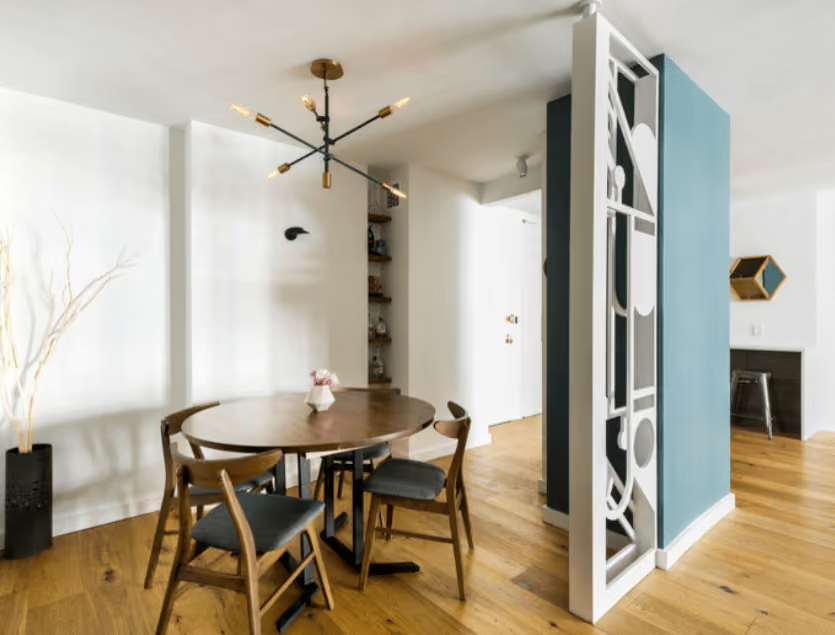
[#Wood]Wood Slat Divider Walls[#Wood]
A vertical wood slat wall offers a softer form of room division. It brings a cost-effective and sophisticated structure to open-plan layouts, and it has become a mainstay of modern interiors. We added a custom Scandinavian-designed wall of this kind in our apartment combination in Columbus Circle.
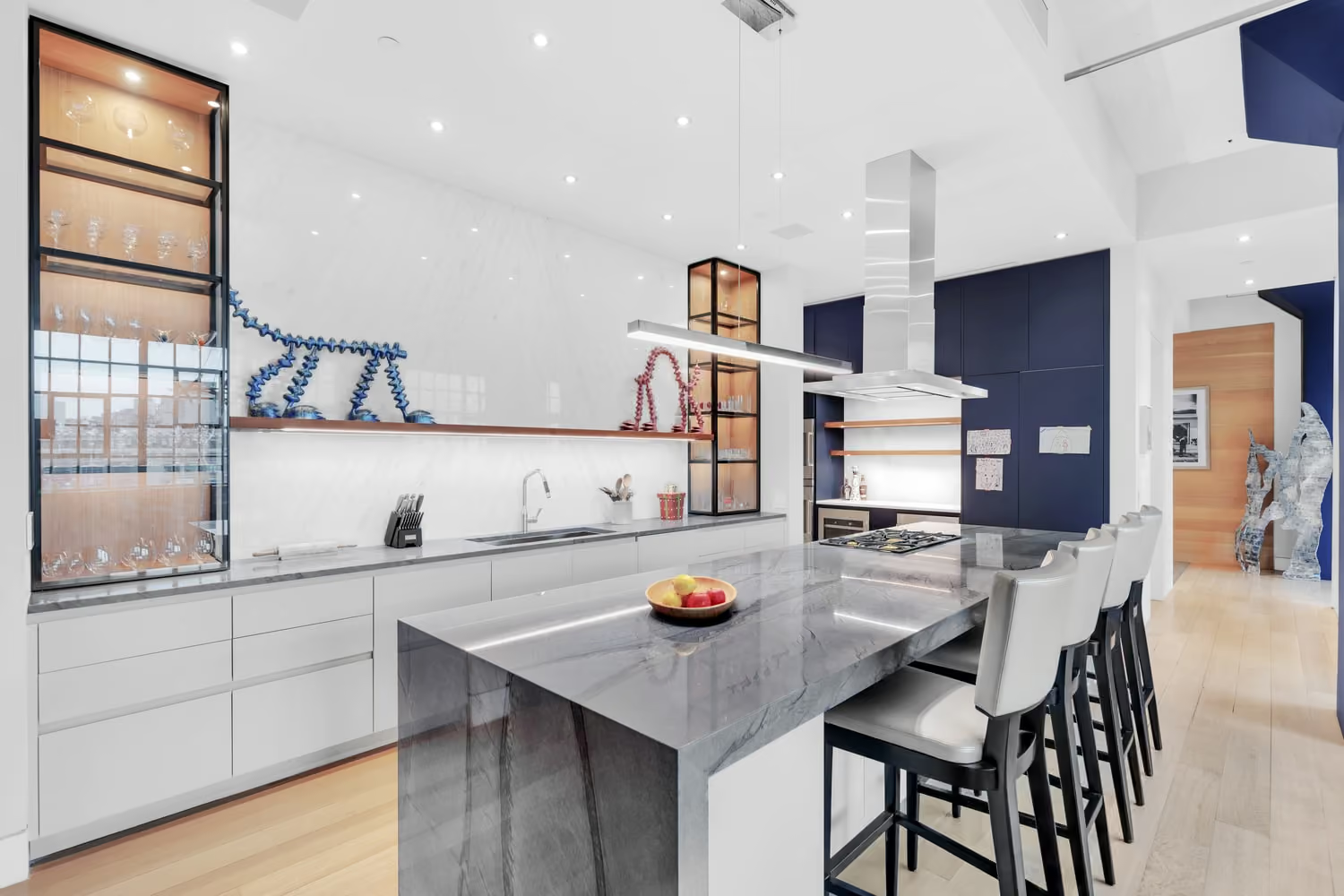
[#Island]Kitchen Island[#Island]
A kitchen island brings a streamlined center to an apartment. It adds workable space to cook and entertain while blending the dining and cooking areas into one inviting room. Our kitchen renovation portfolio shows a range of island designs.

[#Recessed]Recessed Lighting[#Recessed]
Recessed lighting in the ceiling adds depth and broad, even coverage while keeping tight quarters visually open. For this Manhattan apartment renovation, we built custom soffits to introduce recessed lighting where the client wanted it most.
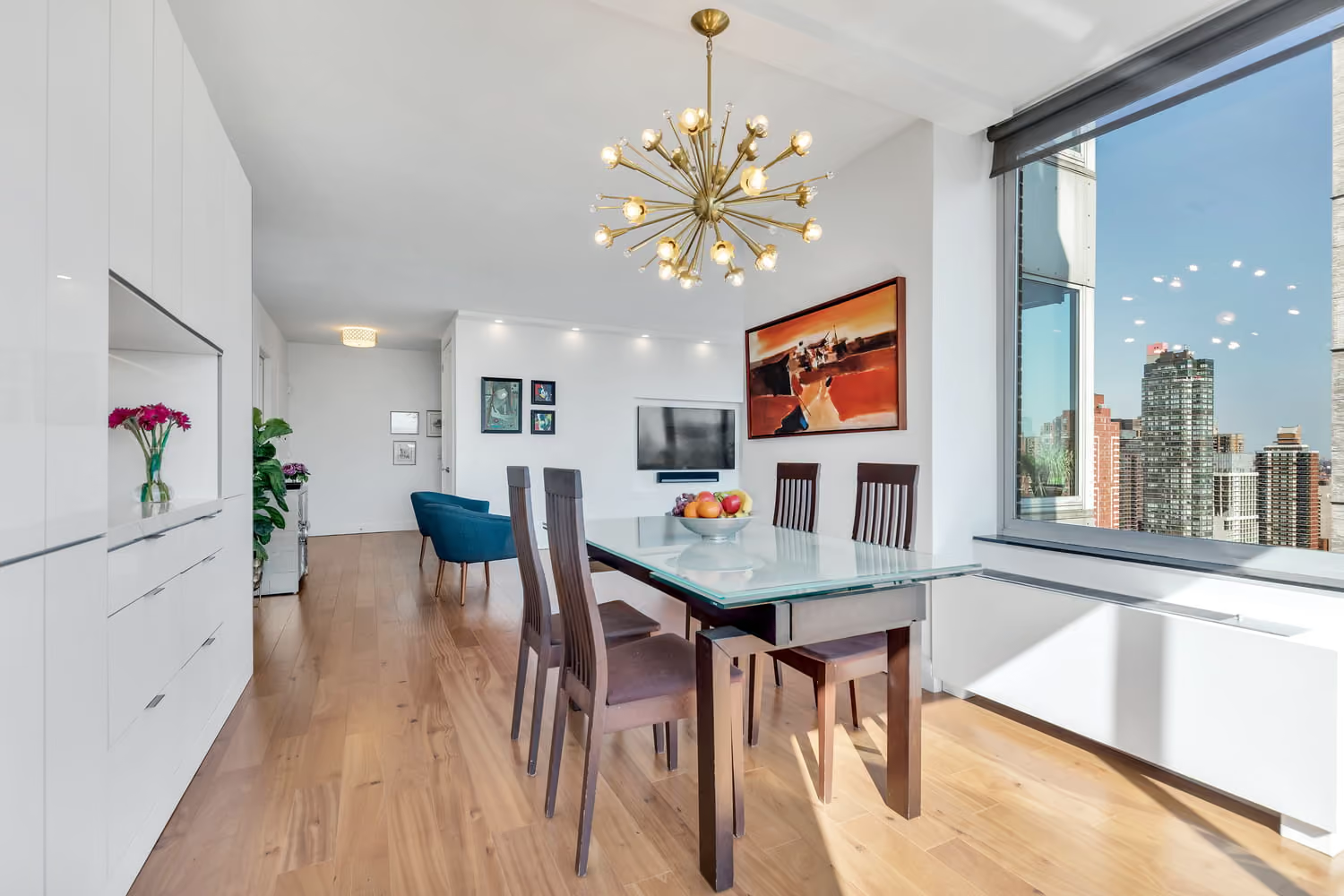
[#Window]Window Walls[#Window]
Manhattan and Brooklyn homes look out on some of the most iconic views anywhere. Walls of oversized windows make the most of them, opening up a room and filling it with natural light.
[#Creative]Creative HVAC & Radiator Enclosures[#Creative]
When an HVAC unit or radiator sits where you would rather it did not, interior architecture can fold it into the room. A built-in bookshelf or closet can frame the unit, with an aluminum mesh grille screening it while allowing ventilation. In this Brooklyn kitchen renovation, the radiator sat in the center of the space, so we built an island around it that put the floor to work and left the radiator out of mind.
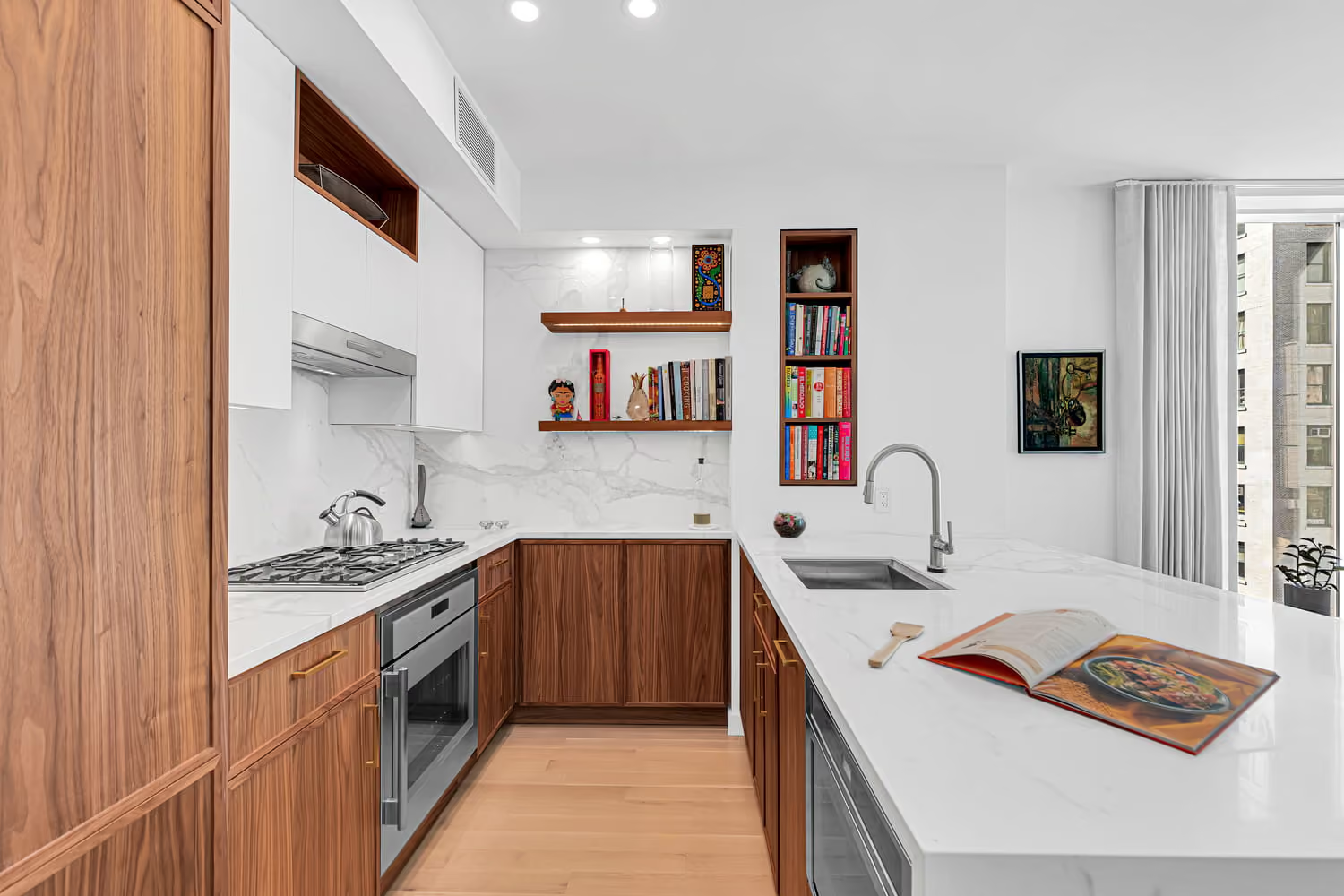
[#Wall]Wall Niches[#Wall]
Recessed wall niches add depth to a room, whether on a single level or several. In this Manhattan condo renovation, we built a wall-niche bookcase that worked a structural column into the kitchen layout, one of many touches that elevate residential interior design.
Add Architectural Interest With Gallery
For a renovation that brings these architectural ideas into your home, consider Gallery. As a full-service design-build firm in New York City, we handle loft, condo and co-op, townhome and brownstone, and pre-war apartment renovations from start to finish, carrying every stage from interior design and architectural planning through board management and construction. Contact us for a consultation.
.avif)
[#faq]Frequently Asked Questions About Interior Architecture In NYC Renovations[#faq]
When does investing in interior architecture make more sense than interior design alone?
Interior design adjusts what sits within a room, while interior architecture reshapes the room itself. When a layout feels closed, a ceiling reads flat, or storage and light fall short, changing the built envelope tends to solve what furniture and finishes cannot. Owners pursuing a lasting change in how a home feels, rather than a refresh, are usually the ones who benefit most from architectural work.
Can recessed lighting be added to a pre-war apartment with concrete or shallow ceilings?
Often, with the right detailing. Where the slab sits too high to recess fixtures directly, a dropped soffit or a lowered section of ceiling creates the depth the housings need. The approach is planned around beam locations and ceiling height during design, so the lighting plan and the ceiling design develop together.
How is a curved or barrel ceiling built within an existing apartment?
A curved ceiling is typically framed below the existing structure, shaped in metal framing and finished in plaster or drywall to the intended radius. Because it lowers the ceiling slightly, the design accounts for height, lighting, and how the curve meets the walls. The result reads as a built architectural feature rather than an applied detail.
Do glass partition walls or wood slat dividers need board or DOB approval?
A non-structural partition that leaves egress and systems untouched is generally a lighter matter, though a co-op alteration agreement may still call for review of the plans. Anything that changes a layout, affects a sprinkler or smoke-detector zone, or touches fire-rated separations moves into DOB filing territory. The path is confirmed during design so the partition is detailed correctly from the start.
Are floor-to-ceiling window walls possible in a co-op or landmarked building?
Inside the apartment, glass walls and partitions that read like window walls are very achievable. Replacing or enlarging the building's actual exterior windows is a separate matter, since it affects the facade and, in a landmarked building, calls for Landmarks Preservation Commission review along with board consent. Confirming which of the two you intend shapes the entire approvals path.
At what stage of a renovation should these architectural elements be decided?
During design, well before construction. Curved ceilings, recessed lighting, partitions, and built-ins all influence framing, electrical, and the sequence of trades, so deciding them early keeps the work efficient and the budget accurate. Settling them after construction begins is where avoidable change orders tend to appear.
let’s
Design-Build
together


%20Gallery%20KBNY.avif)