.avif)


.png)
.png)


Pre-War Apartment Renovation: The Picturesque Pros and Real-Life Cons
Pre-war apartment renovations in NYC are challenging as they are gorgeous. Here's how to ensure your pre-war home renovation goes smoothly.
January 28, 2026
|

Pre-War Apartment Renovation: The Picturesque Pros and Real-Life Cons
Pre-war apartment renovations can often lead to unexpected surprises, and navigating them proactively is essential to a smooth remodel.
Table of Contents
- The Undeniable Appeal Of Pre-War Architecture
- The Hidden Challenges: What Makes Pre-War Renovations Complex
- Questions to Ask Before Committing To A Pre-War Renovation
- Frequently Asked Questions About Pre-War Apartment Renovations In NYC
NYC pre-war apartment renovations can be rewarding, but can raise some renovation challenges. “Based on our experience, we try to let our clients know this ahead of time so there aren’t any costly surprises down the road,” says Gallery KBNY CEO, Avi.
Here, he’s referring to the costs of working with unfavorable site conditions, such as outdated plumbing, antiquated electrical circuitry, plaster walls, and many other conditions typically found in New York City’s many pre war apartments. But, the statement represents something larger about the way Gallery operates: transparency. As a full-service design-build firm, our job is to keep clients privy to every potential issue that may arise, ideally before the job starts, in order to set proper expectations and eliminate any unforeseen hang-ups.
The sentiment also says something about the challenges of renovating a pre-war apartment. “Pre-war architecture,” says Avi, “typically can add cost and some time to the project.”
Is the work worth the cost? Often, yes.
.avif)
[#1]The Undeniable Appeal Of Pre-War Architecture[#1]
Characterized in part by stone and brick exteriors, high ceilings, plaster flourishes, and wood floors, New York City’s pre-war homes are always en vogue. Though built between 1900 and 1940 (although some predate 1900), these historic homes are stocked with elements that appeal to every generation: expansive layouts, lots of natural light, the occasional fireplace. A fresh renovation can launch an already desirable apartment into next-level luxury. Yet, the level up doesn’t come without challenges.
[#2]The Hidden Challenges: What Makes Pre-War Renovations Complex[#2]
Behind the allure of pre-war homes in NYC lurks a range of hidden surprises just waiting to complicate your dream renovation — most of which have been quietly aging for decades. Thankfully, with a renovation partner experienced in the restoration of pre-war properties, clearing the multitude of hurdles can indeed be accomplished. If your home has pre-war construction, here’s what you’re potentially up against:
Outdated Building Materials And Systems
Pre-war apartments often feature original plaster walls, galvanized steel plumbing, and knob-and-tube electrical wiring. While these materials were built to last, decades of wear can lead to hidden corrosion, poor insulation, and structural inconsistencies. Upgrading them requires precision, care, and tight coordination between trades to ensure that preserving the home’s integrity remains just as important as modernizing the systems.
And then there’s the plumbing—an almost guaranteed hurdle in pre-war buildings. As Avi explains, “It’s nearly a given for buildings to request branch plumbing to be upgraded, but plumbing work in pre-war apartments is usually a lot more extensive in comparison to post-war homes.” This can significantly affect the cost of the project.
Hazardous Material Removal
Asbestos, lead paint, and corroded plumbing make a home unsafe. So do mold and other results of advanced age. Properly removing these home health hazards are often worth the renovation alone. “If there is any asbestos or lead paint,” Avi says, “it needs to be handled by a specialized remediation company (Gallery manages this process), which is licensed to handle these hazardous materials properly and responsibly.” If you suspect you’ve got anything hazmat suit-worthy in your walls, removal is a must regardless of whether you’re embarking on a home design adventure.
Low Electrical Capacity And HVAC Limitations
Many pre-war buildings still operate on limited electrical service (often 60 to 80 amps) far below modern standards. This low amperage restricts the addition of energy-heavy systems such as central HVAC, induction ranges, or electric dryers - at least, without a costly electrical upgrade. In most cases, increasing capacity may require building-wide cooperation or board approval, adding both complexity and delay to the renovation timeline. Learn more about these complications and read examples of how Gallery actively solves such challenges via our blog, In-Depth Co-Op Board Approval Process For Complex NYC Renovations: What to Expect.
Heavily Built, Beautifully Stubborn Construction
The very elements that make pre-war homes so desirable (solid plaster walls, steel beams, thick subfloors, and concrete slabs) can also make them incredibly challenging to renovate around. In pre-war homes, typically straightforward upgrades like recessed lighting or HVAC ducting require cutting through dense materials or rerouting systems around immovable structural components. In these cases, design requires more than aesthetic vision, but engineering foresight - plus the right team to execute the intuitive solution.
.jpg)
Compounding Challenges And Coordination Needs
These unfavorable site conditions rarely exist in isolation. Plumbing upgrades can impact electrical routes, HVAC installation can disrupt ceiling structure, and waterproofing efforts can affect flooring transitions. “It’s rare that we open up a pre-war apartment and find only one issue,” says Avi. “Plumbing decisions affect electrical runs, ceiling structures impact HVAC, and every adjustment almost always reveals another issue that needs attention.” This is why pre-war renovations require close coordination among engineers, architects, and contractors—or a single design-build team who houses all specialties under one roof.
Hazardous Materials Remediation
In any NYC home renovation, deeper renovations mean greater time and budget commitments. This goes double for pre-war apartments, since there may simply be more debris to come out. “We can uncover multiple layers of tile, asbestos, lead paint, and corroded plumbing, which would need to be completely overhauled,” says Avi.
There are all sorts of reasons why those layers might be in there. Sometimes, decades of previous owners were simply trying to save their own time or money, by building atop what was already there. “When remodeling walls,” says Avi,” we often uncover layers upon layers of old wallpaper that previous owners just hid.” Removing these pesky layers and other unwelcome remnants of the past inevitably stretch demolition timelines.
Window Replacement and Façade Restrictions
Window upgrades in pre-war apartments may seem straightforward, but they often turn into one of the most regulated aspects of a renovation. In many of Manhattan’s historic buildings, especially those within Landmarks Preservation Commission (LPC) districts, even subtle exterior changes can trigger LPC review and approval. This includes not only full window replacements but also modifications to window frames, glazing, or exterior trim details.
Beyond LPC review, co-op boards and building engineers are extremely cautious about façade adjustments. Even when new windows match existing profiles, boards usually need documentation proving replacement units maintain historical accuracy in material, appearance, and installation method. Some buildings even require specific vendors or restoration specialists for approved replacements.
According to Avi, “Window replacements in landmarked buildings can take longer to approve than entire kitchen renovations.” Since the review process is about preserving the building, the added review is understandable. However, justification doesn’t make planning out the additional documentation, inspections, and longer lead times any more manageable.
When handled appropriately, however, window replacements are worth the added effort, as they automatically improve historically poor insulation and energy efficiency. “In some cases, window replacements are a must-have for clients. It’s just a matter of figuring out what the building requires and handling appropriately.”
Added Cost, Time, and Planning Requirements
All these factors combine to make pre-war renovations more complex, time-consuming, and expensive than standard remodels. Each layer of work, including structural, electrical, and aesthetic, must be addressed in sequence, often with additional oversight from building boards or preservation authorities. That’s why proper planning and expert guidance are essential to your project remaining feasible, compliant, and on schedule.
.avif)
[#3]Questions to Ask Before Committing To A Pre-War Renovation[#3]
Before taking on a pre-war renovation in New York City, clarity is key. These homes can be extraordinary investments, but only when expectations, expertise, and budgets align. The questions below are designed to help you assess both your own readiness and the qualifications of any renovation partner you’re considering.
Asking these before contracts are signed or designs are finalized can reveal whether the property’s potential, your timeline, and your team are all set-up for success.
“Have You Conducted A Thorough Building And Apartment Inspection?”
Inspections should go beyond surface-level issues. When ready to renovate, ask the building super or the previous owner whether the electrical, plumbing, and structural systems have been modernized—or if you’re inheriting a century’s worth of deferred maintenance. The more detail you have, the less surprised you’ll be when the walls come down.
“What’s Your Realistic Timeline And Budget—Including Contingencies?”
Every pre-war building presents its own set of surprises, and no two projects follow the exact same path. Before committing, ask yourself whether your expectations align with that reality. Have you built in time for potential discoveries once walls are opened up? Do you have financial flexibility for unforeseen repairs or scope adjustments that may emerge along the way?
Establishing a realistic timeline and budget (including buffers) helps protect you from stress when the inevitable complications of pre-war renovation arise. In projects like these, patience and proper expectations are as important as design vision.
“Are You Prepared For The Complexity Of A Multi-Phase Renovation?”
From demolition and remediation to design and DOB filings, pre-war projects often unfold in carefully sequenced stages. Knowing this from the start helps set expectations for pace and process. For a design-build firm like Gallery, having all trades under one roof allows us to coordinate pre-war complexities accordingly from all angles, an advantage that provides immense value for our clients in terms of safeguarding renovation design vision and the historic bones of their pre-war property.
“Do You Have Experience Working With NYC Building Departments And Co-Op Boards?”
Every building has unique rules and regulations. Working with a partner who fully understands board protocols, alteration agreements, and approval timelines will help you avoid costly delays and design revisions.
“How Much Of The Pre-War Character Are You Looking To Maintain?”
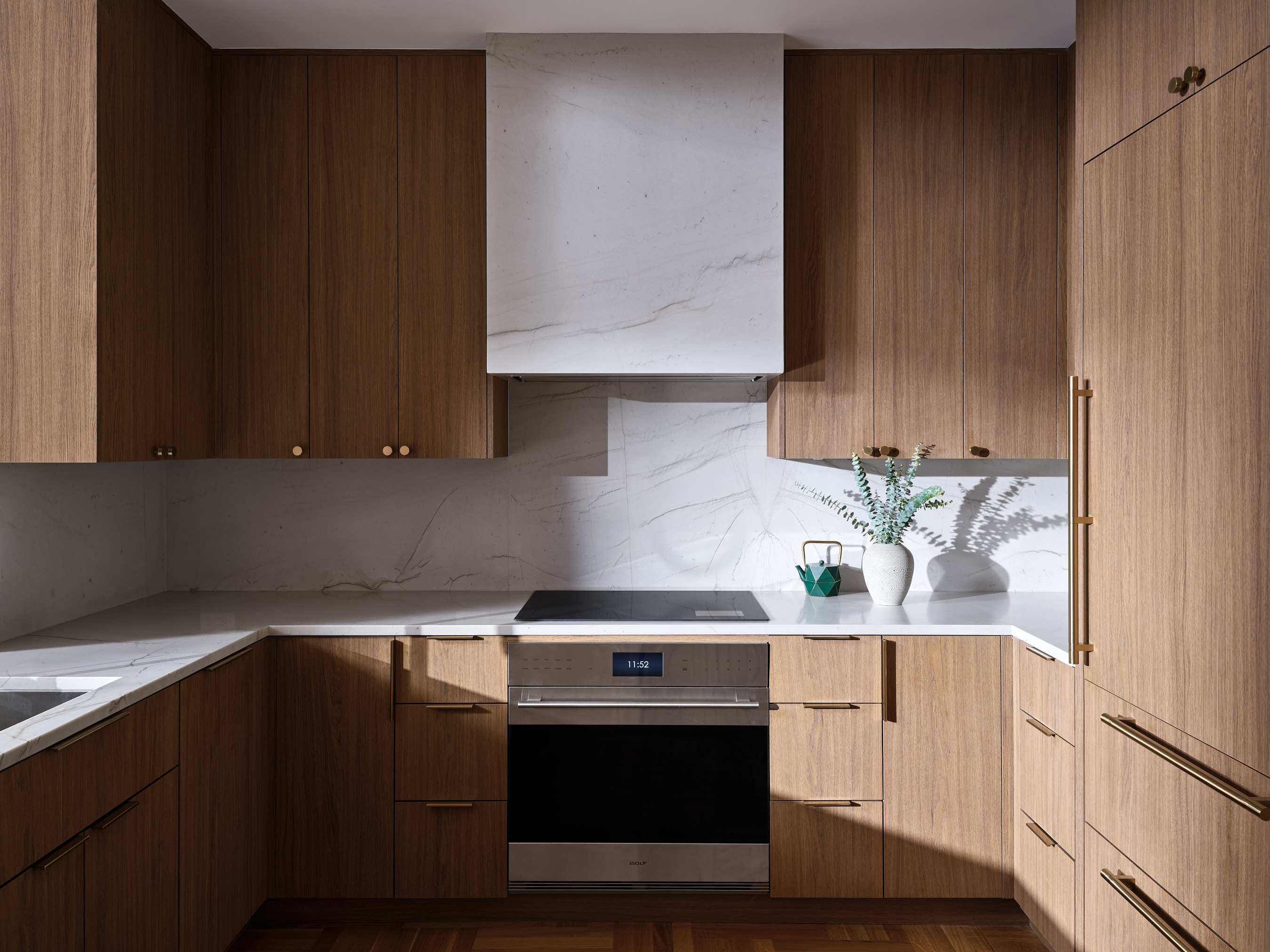
While pre-war homes in NYC convey unmatched charm, not everyone wants to maintain that storied sentiment. By forgoing the restoration of pre-war details, you allow far more flexibility to modernize the home’s aesthetics. This was the case at our Manhattan condo renovation in The Chelsea Mercantile at 252 Seventh Ave, where much of the project leaned into contemporary aesthetics - despite our team having to navigate numerous structural pre-war challenges.
“Do You Have A Team Experienced In Pre-War Renovation?”
From engineers to designers, working with specialists who understand older construction is the difference between a project that stalls and one that succeeds. This is especially the case in New York City, where much of the real estate stock is rich with historic pre-war buildings that gain immense value from modern updates, but require significant work to get there.
Finding a partner who has experience in the intricacies of NYC’s most complicated buildings, such as pre-war co-ops on Park Avenue or classic brownstones in Brooklyn Heights, let you know they’re capable of handling a pre-war project appropriately and with grace. For first-hand examples of the pre-war prowess here at Gallery, view our pre-war renovation portfolio.
[#4]Frequently Asked Questions About Pre-War Apartment Renovations In NYC[#4]
How much does it cost to renovate a pre-war apartment in NYC?
A full gut renovation of a pre-war apartment in New York City typically falls in the range of $500 to $650 per square foot for upper mid-tier finishes, and $650 to $850 per square foot or more for high-end and luxury scopes. For a pre-war apartment in the range of 1,500 to 2,000 square feet, that translates to a total renovation budget of roughly $750,000 to $1,700,000 depending on conditions, finish level, and the extent of mechanical and structural work required.
Pre-war apartments consistently land toward the higher end of renovation cost ranges compared to post-war or newer buildings, because the baseline scope almost always includes work that does not appear in newer construction: electrical service upgrades, plumbing updates, asbestos and lead paint testing and potential abatement, plaster wall demolition and reconstruction, and floor leveling. These are not optional line items. They are conditions that the building presents and that the renovation must address before design work can begin in earnest. Underestimating them is the most reliable way to encounter budget surprises mid-project.
How long does a pre-war apartment renovation in NYC take?
A full pre-war apartment renovation in New York City typically takes 10 to 14 months from the start of planning through construction completion, with more complex projects running longer. The pre-construction phase, covering design development, hazardous material testing, architectural plan preparation, co-op board submission and approval, and DOB permitting, commonly runs 4 to 6 months on its own. Pre-war co-op boards tend to require more documentation and longer review cycles than newer buildings, which contributes meaningfully to the pre-construction timeline.
Construction for a full pre-war gut renovation typically runs 5 to 8 months, though the discovery of unforeseen conditions once walls are opened is more common in pre-war buildings than in any other building type in New York City. Asbestos-containing materials that require abatement, corroded plumbing that expands the original plumbing scope, or electrical service issues that require building-wide coordination can each add weeks to the construction phase. Building contingency time into the construction schedule from the start is not pessimism; it is accurate planning for a building type where the unexpected is genuinely more common.
What is the difference between renovating a pre-war co-op and a pre-war condo in NYC?
The structural and site condition challenges are largely the same in both building types, since the physical characteristics of pre-war construction apply regardless of ownership structure. The meaningful differences show up in the approval process and in how much oversight the building exercises over the renovation.
Pre-war co-ops in New York City tend to have the most involved approval processes of any residential building type. Alteration agreements are often more restrictive, board review cycles are longer, and the boards reviewing engineer or architect may impose conditions that shape the renovation scope in ways that go beyond what the DOB requires. Some pre-war co-ops have specific requirements around HVAC system types, plumbing stack locations, floor assembly specifications for soundproofing, and contractor insurance minimums that are more stringent than industry standard.
Condos follow the same physical renovation logic but typically have a less intensive approval process. Management review rather than shareholder board vote is often the primary hurdle, and the documentation requirements, while still thorough, tend to move faster. For buyers evaluating pre-war properties in New York City, understanding the building's ownership structure and the approval process it entails is as important as evaluating the physical condition of the apartment itself.
Should I try to preserve the original architectural details in a pre-war renovation or start fresh?
This is one of the most genuinely consequential design decisions in a pre-war renovation, and the right answer depends on the condition of the existing details, the design direction for the finished home, and the owner's priorities for the project.
Pre-war apartments in New York City were built with architectural craftsmanship that is difficult and expensive to reproduce. Original hardwood floors, plaster crown molding, ceiling medallions, herringbone parquet, and solid-core doors all have intrinsic value that a renovation starting from scratch rarely recaptures fully. Where these elements are intact and in good condition, preserving and restoring them is almost always worth the effort. The result is a home that feels genuinely historic rather than historically themed, which is a meaningful distinction in the resale market.
Where original details are damaged beyond practical restoration, or where the design direction calls for a fully contemporary aesthetic, starting fresh is a legitimate choice. The key is making that decision intentionally rather than by default. Some owners discover mid-renovation that original details they planned to replace were actually in better condition than they appeared, or conversely that elements they planned to preserve required more remediation than the budget allowed. Assessing the actual condition of original details early, before design decisions are finalized, produces the most informed outcome.
How does plaster wall construction in pre-war apartments affect renovation costs and timelines?
Plaster walls are one of the most consistent cost and timeline variables in pre-war apartment renovations in New York City, and they affect the project in several ways that drywall construction does not. Plaster is significantly heavier and denser than drywall, which means demolition takes longer, generates more debris, and requires more labor hours than a comparable drywall teardown. The debris volume from plaster demolition also affects building logistics, since elevator loads, haul-out schedules, and debris removal coordination are all sized around the weight and volume involved.
When plaster walls are retained rather than demolished, they create their own complications. Running new electrical conduit, plumbing lines, or HVAC ductwork through plaster requires more precise cutting and patching than drywall work, and achieving a smooth, seamless finish after plaster repair is a skilled trade that not all contractors execute at a high level. In pre-war buildings where co-op boards require that certain walls be preserved, the cost of working within rather than through plaster construction should be factored into the renovation budget from the earliest planning stages.
Is it possible to add central air conditioning to a pre-war apartment in NYC?
Yes, though the path to doing so is more constrained than in newer construction, and the solution almost always involves compromise relative to what would be achievable in a post-war or newer building. Pre-war apartments in New York City were not built with central HVAC infrastructure, and the dense plaster construction, low electrical capacity, and building-specific restrictions on exterior penetrations all limit the options available.
The most common approach in well-renovated pre-war apartments involves through-wall or PTAC units for individual rooms, ductless mini-split systems that require only a small exterior penetration for refrigerant lines, or concealed fan-coil systems where ceiling or wall cavities allow for duct routing without compromising the architecture. Each approach involves tradeoffs between coverage, aesthetics, noise, and cost. The building's alteration agreement and the preferences of the co-op board's reviewing engineer often constrain which approach is permissible before design preferences even enter the conversation. Confirming HVAC feasibility and permissibility with building management before committing to an HVAC strategy is an essential early step in any pre-war renovation that includes climate control.
What is the most important thing to do before buying a pre-war apartment with renovation intent in NYC?
A pre-purchase walkthrough with an experienced renovation firm is the single most valuable step a buyer can take before committing to a pre-war apartment that needs work. A surface inspection during a showing reveals the apartment's design potential. A renovation-focused walkthrough reveals the building and unit conditions that will determine what that renovation actually costs and what it can realistically achieve.
The specific things worth investigating before making an offer include the building's electrical service capacity and whether upgrades would require building-wide coordination, the location and condition of plumbing risers and what they allow in terms of kitchen and bathroom placement, the co-op board's track record and alteration agreement restrictions, whether the building is in a landmark district and what that means for window and facade work, and whether visible finishes suggest multiple layers of prior renovation that may conceal asbestos or lead paint. None of these are visible from a listing photo or even a standard buyer walkthrough. They require someone who knows what to look for and what the findings mean for the renovation that follows. In the New York City pre-war market, that due diligence is what separates a smart purchase from a costly one.
How does renovating a pre-war apartment affect its resale value in NYC?
A well-executed pre-war renovation in New York City consistently produces strong resale outcomes, particularly when the renovation respects and enhances the building's original character rather than obscuring it. Buyers for pre-war apartments in desirable Manhattan and Brooklyn neighborhoods are often specifically seeking the architectural qualities that define the building type: high ceilings, substantial room sizes, original or restored hardwood floors, and period detailing. A renovation that modernizes the kitchen, bathrooms, and mechanical systems while preserving or restoring those defining features delivers both the aesthetic that buyers want and the functional performance they expect.
The resale risk in pre-war renovations comes from over-improving relative to the building, under-improving relative to competitive listings in the same building, or removing pre-war character in favor of a generic contemporary finish that does not justify the premium the building's address commands. Estate-condition pre-war apartments in prime buildings that have been fully renovated by experienced firms with a track record in that building type routinely return significant premiums over their purchase price, making them one of the stronger value-creation opportunities in the New York City residential market when approached with the right team and a realistic budget.
Wrapping Up
Pre-war renovations in New York City offer unmatched character, craftsmanship, and history. That’s why we desire them. Yet, those same qualities often come with added complexity. From aging infrastructure to strict co-op and preservation approvals, transforming these homes requires careful planning and expert coordination.
At Gallery, we specialize in modernizing pre-war properties without compromising their architectural integrity. Our all-inclusive design-build process streamlines every step—from concept and compliance to construction and completion—allowing clients to enjoy the beauty of a historic home with the comfort and performance of modern living.
Curious about renovating your pre-war apartment? View some pre-war apartment renovations we've done for clients via our Before + After portfolio. Or, contact us to leverage our full-service, design-build approach that will handle every aspect of the pre-war renovation process from start to finish.
let’s
Design-Build
together